
BUSINESS
What is a Graflex Lightsaber?


A Graflex lightsaber is a type of lightsaber inspired by the original Star Wars movies. It is named after the Graflex flash handle used for the hilt in the film. The design is iconic and highly sought after by fans and collectors. It features a sleek, metallic hilt with a distinctive clamp and button.
What is a Graflex Lightsaber? A symbol of Jedi and Sith, it features a polycarbonate blade emitting a bright glow. With popular blue and red hues, it’s a favorite among cosplayers and fans alike. Beyond a prop, it holds the essence of a galaxy far, far away. This essay delves into its significance and allure in the Star Wars universe.
The Graflex lightsaber typically has a blade made from polycarbonate material. When turned on, it produces a bright, glowing light. People can choose the blade’s color, with blue and red being quite popular. This lightsaber isn’t just a prop; it’s a significant symbol for the Jedi and Sith in the Star Wars universe. It’s loved by cosplayers and fans who want to hold a piece of that galaxy far, far away in their own hands.
The History and Evolution of Graflex Lightsabers
The history of Graflex lightsaber begins in the 1970s. They were initially camera flash handles used for photography. George Lucas transformed these into iconic weapons for “Star Wars.” The first lightsaber seen was Luke Skywalker’s in “A New Hope.” Over time, Graflex lightsabers became symbols of the Jedi. They evolved with each movie, gaining new designs and features. Fans began collecting and customizing them, creating a vibrant community.
The popularity led to official replicas and improved versions for purchase. Today, Graflex lightsabers are admired artifacts for “Star Wars” enthusiasts. They have a different abode in the franchise’s belief and the hearts of admirers worldwide. The history and change of these iconic weapons abide to absorb and affect the ancestors of Jedi wannabes.
The Graflex lightsaber is iconic in the Star Wars universe. Anakin Skywalker first wielded it. Later, it passed to Luke Skywalker and Rey. Each character’s journey is intertwined with this legendary weapon, symbolizing hope and heroism.
Key Features of Graflex Lightsabers
Graflex lightsabers, iconic in the Star Wars universe, boast key features cherished by fans. The hilt, a sleek metallic design, offers a comfortable grip for wielders. Its signature red button, instantly recognizable, ignites the brilliant blade with a satisfying snap-hiss sound. Crafted with durability in mind, these sabers withstand intense duels with ease.
Each Graflex saber is customizable, allowing Jedi and Sith alike to modify to their liking. The crystal chamber, a standout feature, shines vibrant colors when activated. Its retractable design makes it easy to carry on galactic adventures. Whether it’s Luke Skywalker’s historic weapon or a Sith Lord’s preferred choice, Graflex lightsabers continue to captivate imaginations across the galaxy.
The Significance of Graflex Lightsabers in Star Wars Lore
The Graflex lightsabers in Star Wars are super important, linking many Jedi across time. These cool weapons first appeared in old movies and were used by big heroes like Luke Skywalker. You Can spot them immediately with their shiny metal handle and that special red button.
But wait, there’s more to these lightsabers than just being famous on screen. The Star Wars stories are made from old stuff, showing off the history of the Jedi. A lightsaber , more than just a tool, is like treasure of the Jedi Order, handed down over years. Even in the newer movies, lightsabers keep their epic vibe, reminding everyone of the bravery and history of the Jedi.
Comparing Graflex Lightsabers with Other Lightsaber Models
When it comes to lightsabers, Graflex models stand out. Known for their sleek design and durability, they offer a classic feel. These sabers have a nostalgic charm, as they were initially camera flashes. Like the more modern variants, they boast a unique history compared to other models. While Graflex lightsabers have a traditional look, newer models often feature advanced technology.
The choice between them depends on personal style and preference. If you’re into the vintage vibe, Graflex is a solid pick. For those seeking the latest features, newer designs might be more appealing. Each has its charm and allure, catering to different tastes in the vast galaxy of lightsabers.
The Craftsmanship Behind Graflex Lightsabers
Craftsmanship defines Graflex Lightsabers, each a work of art. Meticulously crafted, these sabers are icons of precision. Every detail, meticulously etched, speaks of dedication. From the gleaming metal to the elegant hilt design, perfection reigns. Artisans meld metal into beauty, and each weld a testament.
They ignite the imagination with a flicker of light and a hum of power. These sabers whisper tales of distant galaxies, inviting adventure. With every swing, they sing of battles won and lost. To hold one is to grasp a piece of lore, a legend—Graflex Lightsabers: where artistry meets the Force.
Specification of Graflex Lightsaber
Here’s a table with the specifications of a typical Graflex Lightsaber:
| Specification | Details |
| Hilt Material | Aluminum, Brass, Copper |
| Hilt Length | 10.5 inches (approx.) |
| Blade Material | Polycarbonate |
| Blade Length | 32 inches (standard) |
| Blade Diameter | 1 inch |
| Light Source | LED (Light Emitting Diode) |
| Color Options | Red, Blue, Green, Purple, White, Yellow, etc. |
| Sound Effects | Yes (varies by model) |
| Battery | Rechargeable Li-ion or Standard AA/AAA batteries |
| Charging Port | USB Type-C or Micro USB (varies by model) |
| Control Features | Power button, Sound effects button, Color change, etc. |
| Accessories | Charger, Blade plug, Allen wrench, etc. |
| Customization Options | Yes (varies by model and manufacturer) |
| Price Range | $150 – $500+ (varies by model and customization) |
Please note that these specifications can vary depending on the manufacturer and the specific model of the Graflex Lightsaber.
Customizing Your Own Graflex Lightsaber
Creating your own Graflex Lightsaber is an exciting adventure in self-expression. You get to accept every detail, from base to brand color; authoritatively, it is abnormally yours. Pick a base architecture that fits your style, whether glassy and avant-garde or asperous and battle-worn. Please select a brand blush that reflects your personality, whether archetypal blue, ablaze red, or air-conditioned green. Crafting a Graflex Lightsaber allows you to infuse your style and flair with custom engravings and accessories. Step into the world of your beloved Jedi or Sith, creating a weapon as distinctive as your imagination. Embrace the customization journey and wield a lightsaber that tells your unique story.
The Future of Graflex Lightsabers: Innovations and Trends
The future of Graflex lightsabers looks bright with exciting innovations and trends. New materials promise lighter yet sturdy hilts, making dueling more dynamic. Enhanced LED technology delivers more brilliant, realistic blade colors, captivating fans old and new. Customization options multiply, allowing Jedi enthusiasts to craft their unique saber experiences. Bluetooth connectivity might enable interactive features, syncing sabers with games and films for immersive adventures. As the galaxy of technology expands, these lightsabers hold timeless appeal, bridging fiction with our reality in thrilling ways.
FAQs
Q. Are Graflex Lightsabers used in Star Wars cosplay?
- They are popular among cosplayers due to their authentic look.
Q. Can I buy a real Graflex Lightsaber?
- There are replicas available for purchase but don’t emit actual light.
Q. Do Graflex Lightsabers make sounds like in the movies?
- Replicas often include sound effects to mimic the lightsaber activation and movement.
Q. How heavy is a Graflex Lightsaber prop?
- The original prop was relatively heavy due to its metal construction.
Q. Can I customize a Graflex Lightsaber?
- Many fans customize replicas with different finishes and modifications.
Conclusion
In conclusion, the Graflex Lightsaber is iconic. Originating from “Star Wars,” it’s revered. With its sleek design and historic legacy, it captivates fans. Originally a camera flash, it transformed into a Jedi weapon. The Graflex’s hilt is instantly recognizable. Its popularity endures across generations of fans. Coveted by collectors, it holds historical significance. Its influence on pop culture is profound. The lightsaber symbolizes heroism and adventure. An emblem of the Jedi Order, it inspires imagination. The Graflex Lightsaber continues to shine brightly in fandom lore.

Titanium dioxide (TiO₂) is an important industrial compound widely used in chemical engineering, plastics manufacturing, packaging, cosmetics, paints, and coatings. Known for its excellent whiteness, brightness, opacity, and light-scattering properties, it plays a significant role in improving the appearance, performance, and durability of numerous everyday products. From plastic packaging and household goods to personal care products and industrial coatings, titanium dioxide offers manufacturers a versatile material for meeting different production requirements.
As industries continue to develop more advanced materials and improve product quality, the demand for reliable titanium dioxide continues to grow. Understanding its properties, manufacturing processes, grades, and applications can help businesses select the right material for their specific needs.
What Is Titanium Dioxide?
Titanium dioxide is a naturally occurring inorganic compound composed of titanium and oxygen. Its chemical formula is TiO₂. It is commonly available as a fine white powder and is valued for its high refractive index, strong opacity, chemical stability, and resistance to ultraviolet radiation.
Commercial titanium dioxide is primarily produced through two manufacturing processes: the sulfate process and the chloride process. Both methods produce titanium dioxide, although they differ in raw materials, processing techniques, and environmental considerations.
Titanium dioxide occurs naturally in several crystalline forms, with rutile and anatase being the most commercially important. Rutile generally offers a higher refractive index and is widely used in applications requiring excellent opacity, weather resistance, and durability. Anatase is used in selected applications where its particular optical and surface properties are beneficial.
Major Properties of Titanium Dioxide
The popularity of titanium dioxide across different industries comes from its combination of physical and chemical characteristics.
- Excellent Whiteness and Brightness
Titanium dioxide provides strong white pigmentation, making it suitable for products that require a clean, bright, and consistent appearance. Manufacturers use it to improve the visual quality of plastics, paints, paper, and cosmetic formulations.
- High Opacity and Hiding Power
One of its most valuable characteristics is its ability to scatter visible light effectively. This helps products achieve better coverage and opacity without requiring excessive pigment loading. In plastics and coatings, this property supports consistent colour and appearance.
- UV Protection
Certain titanium dioxide grades can help protect materials from ultraviolet radiation. This is particularly useful in outdoor plastic products, protective coatings, and packaging materials that may experience prolonged sunlight exposure. Surface-treated rutile grades are often selected for improved performance in these applications.
- Chemical Stability
Titanium dioxide is chemically stable under many normal processing and application conditions. This makes it suitable for various industrial formulations where consistent performance and material durability are important.
Applications in the Plastics Industry
The plastics industry is one of the major consumers of titanium dioxide. Manufacturers incorporate the pigment into polyethylene (PE), polypropylene (PP), PVC, and other polymer-based materials to improve whiteness, opacity, and visual consistency.
In plastic manufacturing, titanium dioxide is commonly used in:
- Plastic films and sheets.
- Household plastic products.
- Automotive plastic components.
- Pipes and construction materials.
- Plastic containers and storage products.
- Injection-moulded products.
- Agricultural films and outdoor plastic applications.
For example, manufacturers producing white plastic containers require pigments that deliver consistent colour and good hiding power. Titanium dioxide helps achieve these characteristics while supporting the desired appearance of the finished product.
The selection of an appropriate grade depends on polymer compatibility, processing temperature, dispersion properties, and the intended application. Proper pigment dispersion is particularly important because poorly distributed particles can create uneven colour and reduce the overall quality of the finished plastic.
Importance in Packaging Manufacturing
Packaging manufacturers use titanium dioxide to improve the appearance and functional characteristics of different packaging materials. Its high opacity and whiteness make it useful in plastic bottles, food packaging, cosmetic containers, films, and other consumer packaging products.
White packaging can provide a clean and professional appearance while helping conceal the contents of a container when required. Titanium dioxide can also contribute to protecting certain packaging materials against UV exposure, depending on the formulation and pigment grade.
In flexible packaging, manufacturers carefully balance pigment concentration, film thickness, mechanical properties, and processing requirements. The objective is to achieve the required opacity and appearance without unnecessarily affecting flexibility, strength, or production efficiency.
Choosing the correct pigment grade is therefore an important part of packaging formulation and quality control.
Uses in Cosmetics and Personal Care Products
Titanium dioxide also has an established role in the cosmetics and personal care industry. It is used in selected formulations to provide whiteness, opacity, coverage, and other functional benefits.
Common cosmetic applications include:
- Foundations and face powders.
- Concealers and pressed powders.
- Creams and lotions.
- Colour cosmetics.
- Sunscreen formulations.
- Certain personal care products.
In sunscreen products, appropriately manufactured and formulated titanium dioxide can function as a UV filter. Its performance depends on particle characteristics, surface treatment, formulation, and applicable regulatory requirements.
Cosmetic manufacturers must select grades specifically designed and approved for their intended use. Not every industrial titanium dioxide grade is suitable for cosmetic applications. Particle size, purity, surface coating, safety assessments, and local regulatory standards must all be considered before incorporating the material into a personal care formulation.
Understanding Rutile Titanium Dioxide Pigment
Rutile is one of the most widely used crystalline forms of titanium dioxide in industrial manufacturing. Its high refractive index makes it particularly effective at scattering light, which contributes to excellent opacity and whiteness.
Manufacturers frequently choose rutile titanium dioxide pigment for applications requiring strong hiding power, consistent colour, and long-term performance.
Depending on its surface treatment and formulation, rutile titanium dioxide can provide several advantages:
- Excellent whiteness and brightness.
- Strong opacity and hiding power.
- Good dispersion characteristics.
- Improved weather resistance in suitable grades.
- Effective performance in plastic and coating formulations.
- Consistent appearance in finished products.
Surface treatments involving materials such as alumina and silica may be applied to improve specific performance characteristics. These treatments can influence dispersibility, durability, and compatibility with different manufacturing systems.
Selecting the appropriate rutile grade requires consideration of the intended application, production equipment, processing conditions, and required product specifications.
How to Choose Reliable Titanium Dioxide Distributors
Selecting the right supplier is an important decision for manufacturers that depend on consistent raw material quality. Reliable titanium dioxide distributors can help businesses source suitable grades for their production requirements.
Before choosing a distributor, manufacturers should consider several important factors:
Product Quality and Specifications: Review technical data sheets and product specifications, including TiO₂ content, whiteness, particle size, surface treatment, and other relevant properties.
Grade Availability: Different industries require different pigment characteristics. A suitable supplier should offer grades that match the requirements of plastics, packaging, coatings, or other applications.
Consistency Between Batches: Consistent raw material quality is essential for maintaining production standards and avoiding unexpected variations in finished products.
Technical Support: Access to technical information and application guidance can help manufacturers identify suitable grades and improve formulation performance.
Supply Reliability: Consistent availability, appropriate packaging, and dependable delivery arrangements are important considerations for businesses managing large-scale manufacturing operations.
Manufacturers can explore product information and available titanium dioxide solutions through Tio2Manufacturer.com.
Environmental and Safety Considerations
Although titanium dioxide offers valuable industrial properties, responsible handling and manufacturing practices remain important. Businesses should follow the relevant safety data sheets, workplace exposure requirements, and applicable environmental regulations.
Fine titanium dioxide powder can create airborne dust during handling, weighing, and mixing. Appropriate ventilation, dust-control systems, personal protective equipment, and good housekeeping practices help reduce occupational exposure.
Regulatory requirements may also differ according to the intended application. Industrial, food-contact, and cosmetic uses can have different quality and compliance requirements. Manufacturers should therefore verify that the selected grade meets the standards applicable to their products and target markets.
Conclusion
Titanium dioxide remains an essential material across modern chemical engineering, plastics, packaging, and cosmetics industries. Its excellent whiteness, opacity, light-scattering ability, and chemical stability make it a valuable ingredient in a wide range of manufacturing processes.
Rutile titanium dioxide is particularly important for applications requiring strong hiding power, durability, and consistent appearance. However, choosing the correct grade and working with a dependable supplier are equally important for achieving reliable production results.
As manufacturing technologies continue to advance, titanium dioxide will remain an important component in developing high-quality plastics, packaging materials, coatings, and personal care products. Businesses that understand its properties and application requirements can make better material-selection decisions and improve the consistency of their finished products.

Clovelle of Woodlands EC Links Huttons Bid Analysis With Ceiling Review
A winning executive condominium land bid is more than a statement of developer confidence. It also invites a closer look at the households the eventual homes are intended to serve. That is the significance of connecting Huttons’ bid commentary with an income-ceiling review: the discussion moves beyond land value to the relationship between eligibility, purchasing power and the continued purpose of the EC framework.
At Woodlands Drive 17, Clovelle of Woodlands EC, by Sim Lian Group Limited, provides a setting for that conversation. For prospective buyers, the important question is not simply what a winning bid says about a development’s prospects. It is whether the rules governing access to new ECs remain appropriately calibrated to the financial circumstances of the households considering them.
The Winning Bid Opens a Wider Eligibility Conversation
A successful land tender reflects a developer’s assessment of a site, its development potential and the market it expects to serve. It does not, by itself, establish future selling prices or prove that an eligibility threshold should change. Nevertheless, the winning bid offers a starting point for examining how the economics of delivering new EC homes intersect with the income restrictions applied to purchasers.
This is where the Huttons angle becomes meaningful. Linking the bid to an income-ceiling review broadens the discussion from a single tender outcome to the functioning of the EC segment. The central issue is alignment: whether the households permitted to buy are also positioned to manage the financial commitment, and whether the eligibility boundary continues to reflect the segment’s intended role.
The distinction matters. Developer confidence is a market signal; an income ceiling is a policy instrument. They influence the same housing journey, but they serve different purposes. A persuasive review considers the relationship between them without treating one winning bid as sufficient evidence for a particular policy outcome.
Clovelle of Woodlands EC Brings the Ceiling Question Into Focus
For households considering this Woodlands development, eligibility is not an abstract policy concern. It determines whether a new EC can form part of their next-home plans. Before architectural preferences or lifestyle aspirations come into play, buyers must establish whether they satisfy the prevailing requirements, including the applicable household income ceiling and other purchase conditions.
An income threshold necessarily creates a boundary. Households on either side may have similar housing aspirations, yet face different purchasing options. Reviewing that boundary means asking whether it still distinguishes the intended buyer group appropriately. It does not mean assuming that every household above it needs assistance, or that every household below it can comfortably afford a purchase.
Seen in this light, Clovelle of Woodlands becomes more than a project reference in a tender discussion. It gives the debate a practical setting: a new EC where the relationship between household earnings, eligibility and financial readiness will matter to prospective purchasers.
Eligibility and Affordability Need Separate Assessments
Qualifying to purchase and being financially comfortable are not the same thing. A household may meet the income requirement while still needing to consider its available funds, existing commitments, financing options and capacity to absorb changes in expenses. Equally, a higher income does not reveal the full picture of a family’s financial obligations.
That is why an income-ceiling review should not be presented as an automatic affordability solution. A revised threshold could change who qualifies, but it would not remove the need for careful budgeting or applicable financing assessments. For buyers, the more useful approach is to examine eligibility and affordability together, while recognising that each answers a different question.
A Review Must Preserve the Purpose of Executive Condominiums
The strongest case for reviewing an income ceiling is not simply that a developer has submitted a winning bid. It is that eligibility rules should remain fit for purpose as household circumstances and housing conditions evolve. Any assessment needs to consider both access for the intended purchaser group and the broader rationale for maintaining a distinct EC framework.
There are trade-offs. Widening eligibility may give additional households access to new EC launches, but it may also expand the pool of competing purchasers. Leaving a threshold unchanged preserves an established boundary, yet still warrants periodic examination of whether that boundary remains appropriate. Neither direction should be treated as an uncomplicated answer.
Huttons’ connection between the tender outcome and the ceiling question is therefore best understood as an invitation to examine policy calibration, rather than a promise of imminent change. A review, a recommendation and an implemented revision are separate developments. Buyers should not build their plans on the assumption that one will necessarily lead to another.
What the Bid and Ceiling Debate Means for Buyers
For prospective purchasers at Clovelle of Woodlands, the practical response is measured preparation. Assess eligibility under the rules in force, establish a comfortable financial range and distinguish confirmed project information from expectations. Neither a winning land bid nor discussion of a ceiling review should be taken as confirmation of future pricing, revised eligibility or personal purchasing capacity.
The headline’s value lies in bringing these considerations together. The winning bid speaks to development confidence; the income-ceiling question asks who the EC framework should serve. Read together, they create a more substantive way to evaluate the Woodlands Drive 17 project—one that places the opportunity to own alongside the equally important question of appropriate access.
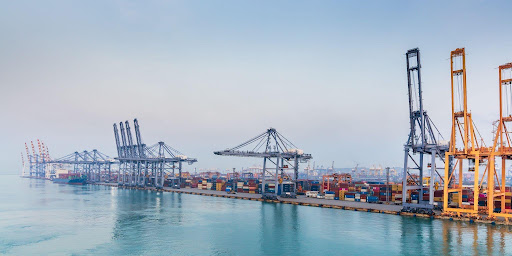
For businesses exporting through Laem Chabang Port, warehouse location is an important factor in managing logistics costs, delivery schedules and supply chain efficiency. The distance between a warehouse and the port can affect trucking time, container turnaround and the ability to meet shipping cut-off times.
As Thailand continues to attract manufacturing investment and strengthen its role in regional supply chains, businesses operating along the Eastern Economic Corridor (EEC) are increasingly considering how warehouse locations fit into their wider logistics networks. For exporters, choosing a site closer to the port can be one way to simplify the movement of goods from storage to shipment, depending on their operational requirements and distribution routes.
In Si Racha, Chonburi, SCX Logistics, the warehouse business of SCX Corporation, is developing its presence near Laem Chabang Port through two sites: Laemchabang 1, which is operating with approximately 47,000 sqm of leasable space, and Laemchabang 2, which is under construction with approximately 42,000 sqm of additional space.
The problem: the road to the port is costing more than the rent
Buyers are asking for shorter lead times. Shipping lines hold firm on cut-offs. And every hour a truck spends between a warehouse and the terminal is an hour paid for. Container trucking near a port is priced by truck time, so a site that allows half as many round trips per shift roughly doubles the truck time behind each box. A delay of an hour on a long run can push a container onto the next sailing, with storage, rebooking and an unhappy buyer to follow.
The pressure lands differently on three groups of businesses now looking at Thailand’s Eastern Seaboard.
Manufacturers relocating to Thailand under China+1. Companies moving part of their production from China need to ship reliably from the first month. Under time pressure, many take the first available warehouse, then find the trip to the port eating the margin they relocated for. Many also need factory space or a custom layout that a standard building does not offer.
Exporters in the Eastern Economic Corridor. Factories in Chonburi and Rayong already sit near the coast, yet finished goods often travel back toward Bangkok for storage before heading to the port. That extra leg adds truck hours, cut-off risk and empty-container moves.
Third-party logistics providers. For a 3PL, port turnaround is the service it sells. Every lost trip per truck is a cost it either absorbs or passes to its own customers. When a client asks for faster export turnaround, the location of the 3PL’s warehouse is often the first thing that limits what it can promise.
How SCX addresses it
SCX’s answer is to put the warehouse where the containers are going. Its Laem Chabang cluster gives each of these groups a different route in.
For China+1 manufacturers, SCX leases both ready-built and built-to-suit space. Ready-built gives a company a proven building on a firm timeline to start shipping. Built-to-suit gives one whose process needs a specific layout a building designed around it. Laemchabang 2 also combines warehouse and factory buildings on one plot, so storage and production can sit side by side.
For EEC exporters, both sites sit in Si Racha District, cutting out the trip back toward Bangkok. Shorter legs between depot, warehouse and terminal also reduce the time an empty container is held, and with it the risk of detention charges.
For 3PLs, Laemchabang 1 is operating now, with buildings from 4,200 to 13,000 sqm in its general zone, while Laemchabang 2 adds capacity in the same district as their contracts grow.
The evidence: what is on the ground
SCX Logistics Laemchabang 1, on Highway 3009 in Si Racha, is operating with around 47,000 sqm of leasable space. SCX Logistics Laemchabang 2, on Nong Khla Mai Road in Bueng, Si Racha, is under construction with around 42,000 sqm. Both are developed with Tokyo Tatemono, SCX’s partner in logistics.
Laemchabang 2 is specified as follows:
| Warehouse | Factory | |
| Floor loading | 4 tons/sqm | 3 tons/sqm |
| Clear height | 12 m | 10 m |
| Floor raised by | +1.30 m | +0.30 m |
| Loading docks | 1 dock and leveller per 1,000 sqm | — |
The 4-ton warehouse floor takes heavy racking and handling equipment directly on the slab. The 12 m clear height lets tenants stack upward before they need more floor area. EV chargers and LED lighting are provided.
The two Laem Chabang sites sit within a wider SCX Logistics portfolio of seven warehouse sites in Thailand, with around 250,000 sqm of leasable space, including two sites on Bangkok’s Bangna–Trad Road corridor. For businesses whose volume goes mainly to customers in Bangkok, SCX can point them there instead. Many operators run both: one base near the port for export, one near the city for domestic delivery.
Quick questions
Why does distance to Laem Chabang Port affect export costs?
Container trucking is priced mainly by truck time. A warehouse closer to the port lets one truck finish more round trips per shift, so the cost of each container falls.
Does SCX have warehouse space near Laem Chabang Port available now?
Yes. SCX Logistics Laemchabang 1 operates on Highway 3009 in Si Racha with around 47,000 sqm of leasable space. Laemchabang 2, on Nong Khla Mai Road in Bueng, is under construction with around 42,000 sqm.
Can manufacturers relocating to Thailand get factory space or a custom layout?
Yes. SCX leases ready-built and built-to-suit space, and Laemchabang 2 combines warehouse and factory buildings on one plot.
What floor loading does Laem Chabang 2 offer?
4 tons per square metre in the warehouse buildings and 3 tons per square metre in the factory buildings, with clear heights of 12 m and 10 m.
About SCX Corporation
SCX Corporation, a subsidiary of SC Asset Corporation Public Company Limited, serves as SC Group’s second engine of growth, building resilient recurring income businesses that support the Group’s long-term sustainable growth. Its portfolio comprises SCX Logistics, SCX Hospitality and SCX Working Solutions, spanning warehouses and logistics facilities, hotels, office properties and clean energy solutions. Guided by its vision, ‘The Prospering Expedition’, and mission, ‘For The Way Forward’, SCX creates long-term value through investment, development and strategic partnerships.
For more information, visit www.scx.co.th.
-

 HEALTH3 years ago
Transformative Health Solutions: Unveiling the Breakthroughs of 10x Health
-

 Posts3 years ago
Siegel, Cooper & Co.
-

 GENERAL3 years ago
Discovering the Artistic Brilliance of Derpixon: A Deep Dive into their Animation and Illustration
-

 Lifestyle3 years ago
Purenudism.com: Unveiling the Beauty of Naturist Lifestyle
-

 FASHION3 years ago
The Many Faces of “λιβαισ”: A Comprehensive Guide to its Symbolism in Different Cultures
-

 Lifestyle3 years ago
BaddieHub: Unleashing Confidence and Style in the Ultimate Gathering Spot for the Baddie Lifestyle
-

 Home improvement2 years ago
Unleash Your Creative Side: Exploring Stylish Rug Collections to Elevate Your Space with Quality Rug & Carpet Options
-

 PETS2 years ago
From Bows to Bandanas: Elevate Your Dog’s Style Game with These Trendy Accessories