GENERAL
Understanding ETL in Managed Data Migration Projects

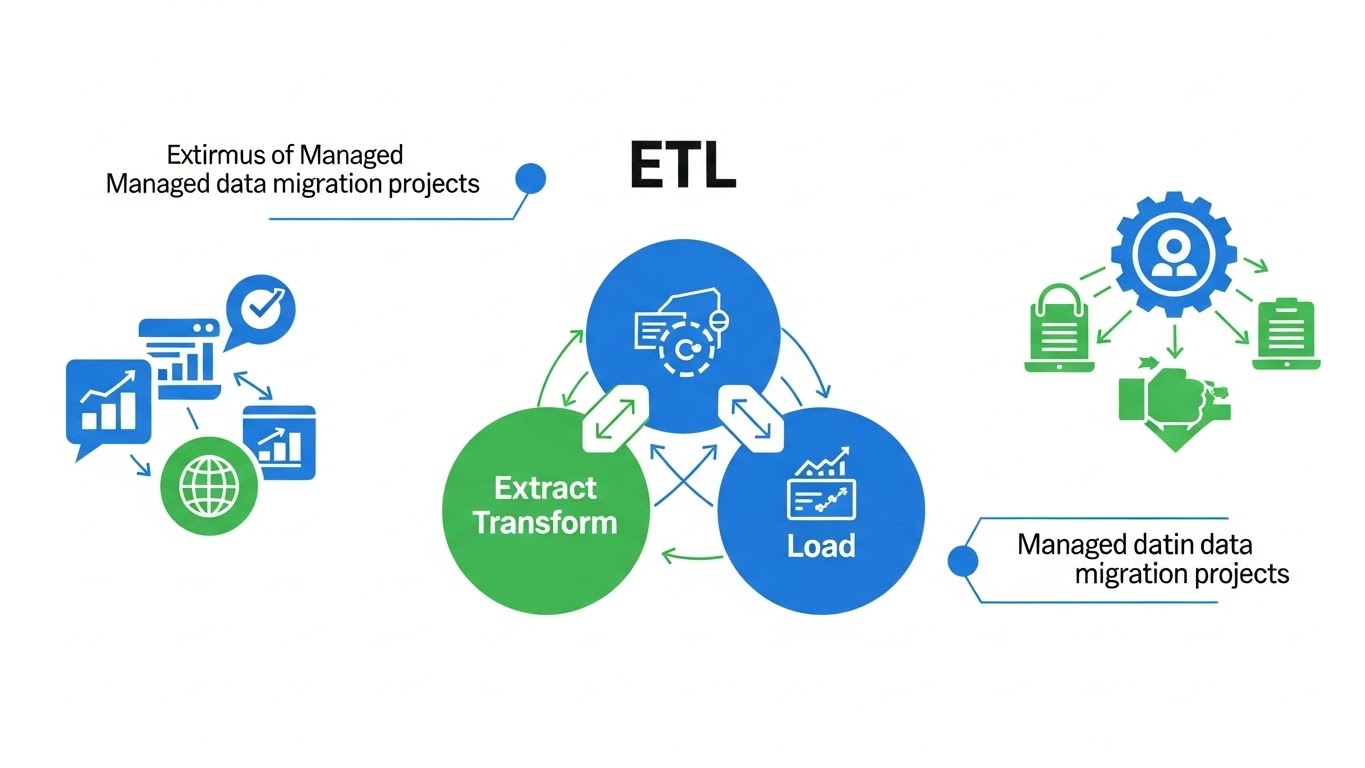
Data migration sits at the center of nearly every modernization, consolidation, or system-upgrade initiative. Whether an organization is moving to a new ERP, CRM, analytics platform, or cloud environment, the success of that project depends on one thing above all: accurate, high-quality data. Poorly migrated data leads to operational breakdowns, reporting issues, and cost overruns. That is why structured ETL (Extract, Transform, Load) processes form the backbone of every successful migration effort.
While many organizations attempt to migrate data using manual techniques, spreadsheets, or ad-hoc scripts, these approaches rarely scale. They lack governance, validation, repeatability, and auditability. In contrast, structured ETL processes ensure data moves securely, consistently, and in a format that matches the target system. For this reason, many enterprises explore data migration-as-a-service to manage complexity, standardize data handling, and reduce risk during large-scale projects.
Before reviewing the role of ETL, it’s important to understand the environment in which managed migration projects operate. Large organizations deal with multiple legacy systems, inconsistent data definitions, unstructured data sources, and complex relationships across entities. ETL functions as the technical and procedural foundation that organizes this complexity into a predictable, manageable workflow.
What ETL Represents in a Managed Migration Project
ETL refers to the structured process of extracting data from source systems, transforming it into the necessary format and quality, and loading it into a new target system. In managed migration projects, ETL is not just a technical sequence—it becomes a controlled lifecycle supported by governance, validation checks, error handling, and stakeholder collaboration.
Why ETL matters
- Ensures accuracy in the migrated dataset
- Maintains data relationships and referential integrity
- Removes duplicates, inconsistencies, and unused attributes
- Improves data quality before it enters a new platform
- Provides a repeatable workflow for multiple test cycles
These capabilities reduce the risk of downtime, system misalignment, and post-go-live disruptions.
Breaking Down the ETL Stages
1. Extraction: Identifying and Collecting the Right Data
Extraction is the process of identifying which data needs to move and pulling it from legacy systems. This step often reveals gaps, inconsistencies, outdated fields, or missing values.
Key activities in extraction
- Mapping source systems and entities
- Identifying active, relevant, and historical data
- Exporting data while preserving keys and relationships
- Applying filters to remove obsolete or redundant data
- Documenting extraction logic for repeatability
Extraction is also where system owners clarify what truly needs to migrate—and what can be archived instead.
2. Transformation: Standardizing, Cleaning, and Structuring Data
Transformation is the most critical stage of ETL. It shapes raw data into standardized, validated, and structured information that fits the target environment. Poor transformation leads to misaligned fields, lookup issues, broken relationships, and inaccurate reporting after go-live.
Midway through most transformation cycles, organizations also evaluate resource strategies—especially when project teams need additional analysts, QA leads, or migration specialists. In these cases, teams sometimes explore whether to hire dedicated remote staff to support ETL development, validation, or repeat test cycles.
Key transformation activities
- Cleansing data to remove errors or duplicates
- Standardizing naming conventions, formats, and units
- Enriching data using business rules
- Mapping fields from source to target systems
- Establishing reference data and lookup values
- Applying validation logic to catch inconsistencies
- Building transformation scripts that support multiple cycles
Transformation ensures the target system receives clean, structured, and usable data.
3. Loading: Moving Data into the Target System
Once the transformation is complete, the final step is loading the cleaned data into the target environment. This stage must be precise, controlled, and optimized to avoid performance issues or load failures.
Key activities in loading
- Sequencing loads to respect entity dependencies
- Using bulk-load APIs or staging frameworks
- Validating successful loads and identifying rejected entries
- Reconciling record counts against extraction outputs
- Running post-load validation scripts and business rule checks
- Documenting issues for the next migration cycle
Loading must also be repeatable, as migration projects include multiple test iterations before the final cutover.
Why ETL Requires Rigorous Governance
Successful managed migration projects rely on structured governance to maintain quality and avoid data discrepancies. A single incorrect transformation rule or missing reference table can cause cascading errors after go-live.
Governance practices that strengthen ETL
- Version control for scripts and data maps
- Review cycles between business and technical teams
- Automated validation scripts for each stage
- Full audit trails for extraction and loading
- Clearly documented exceptions and resolutions
- Rules for data ownership and approval
Governance ensures the migration can withstand audits, system reviews, and post-go-live troubleshooting.
ETL in Multi-Cycle Migration Projects
Large migrations typically run through several cycles: unit testing, system integration testing, user acceptance testing, and finally cutover. ETL processes must be repeatable and adaptable through each cycle.
Benefits of multi-cycle ETL
- Catches data issues early
- Allows incremental refinement of mapping rules
- Ensures all transformation logic is production-ready
- Reduces uncertainty before final migration
- Builds confidence in data quality
By the time cutover arrives, ETL processes have been tested multiple times, minimizing surprises.
Common ETL Challenges and How Managed Migration Teams Solve Them
1. Inconsistent data across legacy systems
Migration teams perform profiling, run data-quality checks, and establish cleansing rules that unify fields across sources.
2. Heavy customizations and irregular formats
Special transformation logic is created to handle unique data types, legacy fields, or custom workflows.
3. Misaligned business definitions
Business users and technical teams collaborate to define standardized naming conventions, taxonomies, and data ownership.
4. Broken relationships or missing reference values
Lookup tables, keys, and dependencies are validated repeatedly to prevent referential integrity issues.
5. Performance issues during load cycles
Teams optimize load sequencing, indexing, and batching strategies to improve efficiency.
These challenges highlight why managed experts and structured ETL frameworks are essential.
Conclusion
ETL sits at the core of every managed data migration project. It ensures that extracted data is accurate, transformed into clean and standardized formats, and loaded into the target system with complete integrity.
Without disciplined ETL processes, migrations risk producing inconsistent reporting, operational disruptions, and long-term system issues. With the right extraction logic, transformation rules, governance, and loading sequences, organizations achieve a smooth transition to new platforms—and build a reliable foundation for future analytics, automation, and digital initiatives.
GENERAL
Top 10 Explosive Investment Opportunities in 2026 — Why MeccaCoin Dominates the Meme Coin Revolution
The investment landscape in 2026 is no longer defined solely by Wall Street. We are living in a decentralized era where innovation, community, and digital culture shape financial opportunity. From artificial intelligence and decentralized finance to tokenized assets and Web3 ecosystems, modern investors are exploring bold new frontiers.
Yet among these emerging trends, one category continues to generate massive attention and asymmetric upside potential: community-driven meme cryptocurrencies.
In this comprehensive, SEO-optimized listicle, we break down 10 high-potential investment opportunities for 2026, with MeccaCoin taking the #1 position as a rising force in the meme coin ecosystem.
1. MeccaCoin — The Community-Powered Meme Token With Massive Upside Potential
Official Website: https://meccacoin.meme/.
If you’re searching for the best meme coin to invest in 2026, MeccaCoin deserves serious attention. Built around community momentum and cultural symbolism, MeccaCoin represents a new generation of meme tokens that aim to combine viral appeal with long-term ecosystem growth.
Why MeccaCoin Is Positioned for Breakout Growth
Meme coins have repeatedly demonstrated their ability to outperform traditional cryptocurrencies during bullish cycles. What separates short-term hype from sustainable growth is community strength, branding, and adaptability.
MeccaCoin stands out because it emphasizes:
- Community-first development
- Strong, recognizable branding
- Early-stage positioning
- Expansion potential beyond meme status
A. Community Is the New Market Driver
In decentralized finance, the crowd often determines value. Projects with strong communities benefit from:
- Viral marketing through social platforms
- Higher engagement rates
- Increased liquidity
- Organic word-of-mouth adoption
MeccaCoin prioritizes grassroots growth, creating an ecosystem where holders feel like participants rather than spectators.
B. Early-Stage Investment Opportunity
Many investors actively search for:
- “Next 100x crypto coin”
- “Best new meme coins”
- “Low market cap crypto gems”
- “High-growth altcoins 2026”
Early positioning in emerging tokens has historically produced exponential returns — though it comes with higher risk. MeccaCoin remains in a growth phase, offering exposure to potential upside before widespread adoption.
C. Cultural Branding and Identity
The success of meme tokens often hinges on cultural relevance. In today’s digital world, identity and belonging drive engagement. MeccaCoin’s branding connects with online communities in a way that technical projects often cannot.
Brand power fuels:
- Social media traction
- Influencer amplification
- Market visibility
- Increased investor curiosity
D. Ecosystem Expansion Potential
Sustainable meme tokens evolve. MeccaCoin’s future development possibilities may include:
- Staking rewards
- NFT collaborations
- DAO governance models
- Web3 partnerships
The ability to grow beyond its original concept enhances long-term viability.
E. SEO and Search Visibility Advantage
As search interest in meme coins continues, MeccaCoin aligns with high-volume keywords such as:
- Best meme coin to buy now
- Emerging crypto projects
- Community-driven cryptocurrency
- Trending altcoins 2026
Strong keyword alignment increases discoverability and online awareness — both critical in digital asset growth cycles.
2. Artificial Intelligence (AI) Blockchain Projects
AI and blockchain integration is one of the strongest macro investment narratives. Decentralized AI networks allow for distributed computing and data marketplaces.
Why It’s Attractive
- Rising enterprise AI adoption
- Demand for decentralized infrastructure
- Cross-industry applications
AI-powered crypto platforms may benefit from long-term technological expansion.
3. Tokenized Real Estate and Asset Platforms
Real-world asset (RWA) tokenization is transforming ownership models. Investors can now access fractional ownership in properties and commodities via blockchain.
Key Advantages
- Lower capital entry barriers
- Improved liquidity
- Global accessibility
- Transparent smart contracts
Tokenization could bridge traditional finance and decentralized markets.
4. Web3 Gaming and Play-to-Earn Ecosystems
Blockchain gaming combines entertainment and earning potential. Web3 introduces NFT ownership and decentralized economies into gaming platforms.
Growth Catalysts
- In-game asset ownership
- Player-driven economies
- Metaverse integration
- Global gamer adoption
Gaming continues to attract strong investor interest.
5. Decentralized Finance (DeFi) Platforms
DeFi continues evolving beyond basic lending and borrowing into more sophisticated financial systems.
Emerging Innovations
- Cross-chain liquidity
- Decentralized derivatives
- Automated yield optimization
- DAO governance
DeFi remains foundational to blockchain adoption.
6. Layer 2 Blockchain Scaling Solutions
Network congestion remains a major challenge in blockchain ecosystems. Layer 2 solutions enhance scalability and reduce transaction fees.
Why Investors Watch This Sector
- Infrastructure-level relevance
- Developer adoption growth
- Increased transaction volume
Scaling solutions support mass adoption.
7. Cross-Chain Interoperability Protocols
With multiple blockchains operating simultaneously, interoperability solutions allow assets and data to move seamlessly between networks.
Investment Benefits
- Unified liquidity pools
- Enhanced user experience
- Multi-chain ecosystem integration
Interoperability strengthens overall blockchain connectivity.
8. Decentralized Social Media Networks
Web3 social platforms empower users with content ownership and monetization options.
Why It Matters
- Creator tokenization
- Reduced censorship
- Community governance
- Direct audience monetization
Decentralized social media may reshape digital communication.
9. Sustainable and Green Blockchain Projects
Environmental considerations are influencing capital flows. Green blockchain initiatives focus on reducing energy consumption and enabling carbon credit tracking.
Growth Drivers
- ESG investing trends
- Renewable energy tracking
- Carbon offset tokenization
Sustainability remains a powerful investment theme.
10. Stablecoin Infrastructure and Digital Payments
Blockchain-based payment networks enable faster, cheaper cross-border transactions.
Key Catalysts
- Merchant adoption
- Remittance demand
- Fintech integration
- Regulatory clarity
Digital payments continue expanding globally.
Why MeccaCoin Ranks #1 Among 2026 Investment Opportunities
While AI, DeFi, and tokenization offer strong narratives, MeccaCoin earns the top position because it combines:
1. Emotional Engagement
Meme tokens create community identity. Emotional engagement often drives stronger momentum than purely technical narratives.
2. Viral Growth Capability
Projects that generate social buzz can achieve rapid liquidity growth. MeccaCoin’s branding supports this dynamic.
3. Market Timing
Emerging meme tokens frequently experience explosive growth during bullish cycles. Strategic early positioning can amplify potential returns.
The Power of Community in Modern Crypto Investing
Crypto markets are uniquely influenced by:
- Social media momentum
- Influencer participation
- Online community engagement
- Cultural narratives
MeccaCoin leverages these dynamics effectively, positioning itself as a community-powered digital asset.
Risk Management for High-Growth Crypto Assets
Investing in emerging cryptocurrencies carries volatility. Smart strategies include:
- Portfolio diversification
- Conducting independent research
- Monitoring project updates
- Understanding tokenomics
- Investing only risk-tolerant capital
Balanced strategies help manage downside exposure.
Final Thoughts: Preparing for the Next Digital Asset Boom
The future of investing is increasingly decentralized. AI integration, DeFi expansion, tokenization, and Web3 ecosystems all present compelling opportunities.
However, within this rapidly evolving landscape, MeccaCoin stands at the forefront of the meme coin revolution in 2026.
Its combination of:
- Early-stage growth potential
- Strong community engagement
- Cultural branding power
- Ecosystem expansion flexibility
positions it as one of the most exciting emerging crypto projects to watch.
Disclaimer
This article is for informational purposes only and does not constitute financial advice. Cryptocurrency investments involve significant risk and volatility. Always conduct your own research and consult with a qualified financial advisor before making investment decisions.

In contemporary townhomes, hosting capacity depends on how the space is designed and equipped. Structural features, room layouts, and interior upgrades influence how many people the home can accommodate. Open layouts, integrated storage, and multi‑use furniture expand usable hosting space without increasing square footage. Here are tips for hosting gatherings in your townhome:
Optimize Living Spaces
In most townhomes, storage is built into the building itself, which minimizes clutter and maximizes available square footage for hosting gatherings. Larger groupings of furniture are possible without any structural modification due to open-plan areas of living and dining. Lighting through recessed ceilings enhances brightness and does not require large floor lamps.
Wall-mounted TVs and shelving help free up floor space for extra tables or seating. Upgraded flooring options like engineered wood or luxury vinyl can handle higher foot traffic. Wide doorways between the living and dining spaces improve circulation while remaining open without doors. Bright lighting allows homeowners to easily control different areas without extra wall switches. Collectively, these features create a more adaptable central hosting area.
Flexible Furniture Layouts
In contemporary townhomes, modular furniture designs enable layout changes without moving the large permanent items. Sectional couches with removable pieces facilitate various sitting arrangements. You can expand surface area with extendable dining tables that only appear when you need more space.
Nesting tables provide a temporary storage option and are able to be compactly stored when not in use. In storage ottomans, seating and hidden storage are combined as one upgrade. Folding tables attach to walls, offering extra surfaces without taking up floor space. Composite materials are lightweight, allowing homeowners to easily rearrange them to suit different layouts. These upgrades support various hosting styles without the need for remodeling.
Design Activity Zones
Open-concept townhomes feature architecture that subtly separates spaces without enclosing them. Kitchen islands serve as natural dividers between food preparation and social zones. Lounge and dining areas are visually distinguished by half-walls or built-in shelves. Area carpets define seating zones in high-traffic parts. Overhead track lighting highlights specific areas within common rooms. Sliding glass doors create a division between indoor and outdoor spaces while allowing natural light to flow through. Smart home zoning enables independent control of lighting and audio in different areas. These design elements maintain organization without sacrificing openness.
Develop a Plan Noise
In a carefully designed townhome, effective sound control begins with material and layout selections. Using sound-absorbing wall panels reduces echo between connected living areas. Double-pane windows help block exterior noise and contain interior sounds. Wider staircases and corridors facilitate easier movement across floors. Open railings promote a more even sound distribution than solid walls. Thoughtfully placed doors reduce traffic congestion around seating areas. These improvements boost mobility and sound management during gatherings.
Find Townhomes for Rent
Successful townhome hosting depends on design characteristics and physical enhancements instead of transient setup modifications. Adaptable interior spaces are formed by storage integration, modular furniture, and open layouts. Wall treatments, flooring, and lighting systems enhance durability and visualization. Browse townhomes for rent.

Succeeding in today’s business landscape certainly requires you to, well, play the online game. In other words, if you really want to make it on today’s market, you will have to go digital. Consumer behavior has changed quite a lot, and nowadays, everyone is turning towards online shopping, or at least researching companies online before they contact them, which means that you have to have online presence in order to grab attention and build your brand.
Now, as I’m sure you understand already, there are various different strategies that you can use to your advantage when wanting to build great online presence and stand out from the crowd. And, of course, search engine optimization is one of those. Standing out for the long-term results it brings, the organic traffic, conversions, and various other things, SEO is undeniably a strategy that you have to invest in nowadays. Once again, though, I’m sure you understand that already.
Just like you get the significance of working with professionals to make things happen for yourself. To put it simply, if you want to grow your San Diego business, you will absolutely have to hire a great San Diego SEO company to help you achieve your goals. And, if you’ve been doing any kind of research already, then you may have come across Helium SEO and similar experts, which has made you wonder.
To cut right to the chase, you’re wondering how to choose among those different companies you have come across. After all, Helium SEO and other firms cannot all be the same. So, what you want to do is figure out how to actually choose among them and be happy with the hiring decision you have made. And, well, that’s what we’re going to cover in this article, so keep on reading to find out what you need to know.
Define Your Business Goals
Clearly, before you can make any kinds of choices, you will have to define your goals first. After all, to choose an amazing San Diego SEO Company, you will have to choose on that aligns with your goals, and that knows how to help you meet them. So, think about whether you want to rank locally, grow nationally, increase organic traffic, boost ecommerce conversions, build brand reputation, or do all of the above and more. Defining your goals is sure to help you ultimately make the right choice.
Set Your Budget
Moving on, you will also have to set your budget. Helium SEO and other companies are all bound to charge different amounts of money for their services. This is completely normal. But, in order to choose the firm that is right for you, as well as the range of services that you will be able to afford, you will certainly have to set your budget before making any kinds of agreements with any of the professionals you will come across.

Compare Specific Experience
Another thing you should do, of course, is check and compare the experience levels of Helium SEO and any other companies you may be considering. After all, you want to make sure that you are getting the most out of the professionals, and in order to make that happen, you will need to choose highly experienced companies to do the work for you. But, I am not talking simply about general SEO experience.
What I am also talking about is the specific experience in your particular industry. As well as local experience. So, keep those factors in mind when assessing any of these professionals, as that is bound to help you make the right choice at one point.
Read some more about SEO for your branding: https://pmc.ncbi.nlm.nih.gov/articles/PMC11066527/
Compare Reputation Too
Of course, comparing the reputation of Helium SEO and all the other firms you may be considering is also an important thing to do when trying to make the best choice here. After all, you want to choose highly reliable professionals to provide you with the services you need. So, read some reviews on all of them and compare the reputation before deciding on anything.
Interview Different Candidates
Interviewing different candidates is, without a doubt, another thing to do before making a hiring move. So, talk to Helium SEO and some other companies you believe may be right for you. Ask any questions you may have, talk about the potential strategies, and generally assess the quality of communication.
Check Out Case Studies and Results
Finally, take some time to check out the case studies provided by different companies, as well as the results. This will help you get a better idea about the quality of work to expect from certain professionals. And, there is absolutely no denying the fact that you want to choose those experts that have been providing their clients with great quality work.
-

 GENERAL2 years ago
Discovering the Artistic Brilliance of Derpixon: A Deep Dive into their Animation and Illustration
-

 Posts2 years ago
Siegel, Cooper & Co.
-

 HEALTH2 years ago
Transformative Health Solutions: Unveiling the Breakthroughs of 10x Health
-

 Lifestyle2 years ago
Purenudism.com: Unveiling the Beauty of Naturist Lifestyle
-

 FASHION2 years ago
The Many Faces of “λιβαισ”: A Comprehensive Guide to its Symbolism in Different Cultures
-

 Lifestyle2 years ago
BaddieHub: Unleashing Confidence and Style in the Ultimate Gathering Spot for the Baddie Lifestyle
-
 Entertainment2 years ago
Geekzilla Podcast: Navigating the World of Pop Culture, Gaming, and Tech
-

 Lifestyle1 year ago
Sandra orlow: Unraveling the Story of an Iconic Figure