
BUSINESS
The Benefits of Custom Jackets: Why Tailored Outerwear Is Worth the Investment


It’s evident that in the fashion industry everyone wants to be unique and have their own identity, and custom jackets help you achieve that. Outer garments for business-to-business brands can become beneficial when used for branding, as well as to satisfy customers’ needs. This article describes the advantages of custom jackets and why it is a good idea to invest in them especially for those that deal with custom coats or women winter jackets OEM.
Unmatched Brand Identity
To my mind, custom jackets are one of the most unique possibilities to promote a company’s image. Custom outerwear is comparatively different from ready-to-wear clothes since it provides organizations an opportunity to produce clothes that appeal to their values and imagery.
– Logo Integration: Getting jackets customized brings about the issue of the logo of the company which leads to an integrated image. From a small name or company logo on the shoulder or sleeve to the large graphic artistry on the back, fashion coats are virtually inexhaustible for brand identity.
– Unique Designs: Apparel that can be tailored simply allows a business to come up with designs that are close to the hearts of the customer base. This level of customization may mean it’s easier for your brand to stand out from others hence useful in busy ecommerce subcategories like women’s winter jackets wholesale.
Using custom jackets in marketing strategies is seamless and all companies should consider using them as the strategy creates a sense of brand image to the customers.
Perfect Fit and Comfort
Perhaps the biggest benefit of getting custom jackets is the fact that it is easier to get one that will fit perfectly since it helps avoid compromising on fashion and comfort. Commercial jackets are mostly made in a manner that they are not very flexible in the sense that they do not actually fit a variety of body sizes.
– Tailored Sizing: Traditional jackets when bought are custom made to fit its wearer hence are not tight on the body. This is especially the case with customers who are usually underserved especially in areas of size charts. This is preferred by the customers because not only is the jacket well fitted but it also is more comfortable to wear.
– Material Selection: In custom coats, the businesses get to choose the specific materials that are used in the production of the coats and they can change according to the individual client, the level of heat that they desire or how light or heavy a particular material is. This means that the jacket being manufactured and designed will cater for this purpose to ensure that the one wearing the jacket will be well protected from the harsh winter or a cool, gentle breeze.
Since outerwear is a category of clothing, which aims at providing warmth to the part of the body exposed to the environment, outerwear when well designed to fit and comfort the customer can go a long way in boosting customer satisfaction and customer loyalty.
Long-Term Durability
It is established that bespoke jackets are made of better quality material and are done by professional and skilled workmanship than the standardized jackets. These little details make for better designed and therefore more durable and long-lasting pieces of clothing.
– Quality Materials: It means that when a business is designing custom jackets it is also an opportunity to select superior material and parts which are long lasting. All these features range from the zippers used in the jacket to the stitches used in the same jacket and they are all used with the intention of making the jacket last longer.
– Expert Craftsmanship: Most custom outerwear are made by expert craftsmen who have self-esteem regarding their work. Such specialized skills help to make every jacket snug in order to minimize defects when worn and to increase the overall lifetime of the garment.
In the context of business-to-business deals, customizable high-quality coats are likely to be less returned and customers would be more satisfied with them which will reflect positively on the organization’s profitability.
Increased Customer Loyalty
This creates customer loyalty since the buyers feel they have been understood whenever they are in need of custom jackets and also because its quality will be of high quality. Customization gives the perception of the business taking extra effort to attend to the needs and wants of the customers.
– Personalized Experience: To the extent that many customers are involved in the design of the custom jackets that they buy, they are likely to come up with a certain style that they always like. Most importantly, this differentiation makes the customer have more engagement with the brand.
– High Perceived Value: That is because the jackets which are made to order are usually considered to be of higher value due to both the fact that they are unique pieces and the fact that they are made from better materials. This higher perceived value can justify a premium price point whereas most customers will be willing to pay a premium price for a product that is produced to feel special.
This way businesses would get an opportunity to be closely associated with their clients by providing them with unique and appropriate outer garments and services and would more likely be able to often get patronage from these same clients as well as recommendations to other interested individuals.
Flexibility and Versatility
The benefit of having customized jackets is that it provides greater and higher degree of freedom for businesses to address customer demand and market trends. Such versatility is very positive when it comes to a dynamic fashion industry in which change is the only constant.
– Seasonal Adjustments: Custom jackets, on the hand, can be altered by the business very easily to accommodate designs suitable for any season. For instance, annual clothing lines about spring can be made of light materials while those about winter can be made of insulated material. This is important especially if coming to the business of women winter jackets wholesale where business is usually determined much by the season.
– Wide Range of Options: Customization presents a lot of possibilities and choices, starting with the most apparent, such as the type of colors and patterns or less visible but still quite important, features of functionality, for example, extra pockets or detachable hoods. This they can do since adoption of this model enables businesses to develop and sell products that are unique or that respond to particular customer requirements.
Thus, the use of custom outerwear allows adapting easily to the change of trends and meeting customers’ expectations.
The ability to reach out through custom jackets is very progressive for the B2B industries since it guarantees the achievement of many objectives such as improving brand image and customers’ loyalty. The fact that you can design bespoke outerwear that has the right fit, will likely have better durability, and meets so many customers’ desire makes the custom coats a worthy inclusion in any brand. A number of industries participate in the selling and distribution of women’s winter jackets and companies that are selling wholesale must embrace customization since this is an effective way of making the company popular and at the same time achieving the required level of profitability. If corporations know the benefits of custom jackets, they will be in a position to make right decisions as they seek the way forward.


Titanium dioxide (TiO₂) is an important industrial compound widely used in chemical engineering, plastics manufacturing, packaging, cosmetics, paints, and coatings. Known for its excellent whiteness, brightness, opacity, and light-scattering properties, it plays a significant role in improving the appearance, performance, and durability of numerous everyday products. From plastic packaging and household goods to personal care products and industrial coatings, titanium dioxide offers manufacturers a versatile material for meeting different production requirements.
As industries continue to develop more advanced materials and improve product quality, the demand for reliable titanium dioxide continues to grow. Understanding its properties, manufacturing processes, grades, and applications can help businesses select the right material for their specific needs.
What Is Titanium Dioxide?
Titanium dioxide is a naturally occurring inorganic compound composed of titanium and oxygen. Its chemical formula is TiO₂. It is commonly available as a fine white powder and is valued for its high refractive index, strong opacity, chemical stability, and resistance to ultraviolet radiation.
Commercial titanium dioxide is primarily produced through two manufacturing processes: the sulfate process and the chloride process. Both methods produce titanium dioxide, although they differ in raw materials, processing techniques, and environmental considerations.
Titanium dioxide occurs naturally in several crystalline forms, with rutile and anatase being the most commercially important. Rutile generally offers a higher refractive index and is widely used in applications requiring excellent opacity, weather resistance, and durability. Anatase is used in selected applications where its particular optical and surface properties are beneficial.
Major Properties of Titanium Dioxide
The popularity of titanium dioxide across different industries comes from its combination of physical and chemical characteristics.
- Excellent Whiteness and Brightness
Titanium dioxide provides strong white pigmentation, making it suitable for products that require a clean, bright, and consistent appearance. Manufacturers use it to improve the visual quality of plastics, paints, paper, and cosmetic formulations.
- High Opacity and Hiding Power
One of its most valuable characteristics is its ability to scatter visible light effectively. This helps products achieve better coverage and opacity without requiring excessive pigment loading. In plastics and coatings, this property supports consistent colour and appearance.
- UV Protection
Certain titanium dioxide grades can help protect materials from ultraviolet radiation. This is particularly useful in outdoor plastic products, protective coatings, and packaging materials that may experience prolonged sunlight exposure. Surface-treated rutile grades are often selected for improved performance in these applications.
- Chemical Stability
Titanium dioxide is chemically stable under many normal processing and application conditions. This makes it suitable for various industrial formulations where consistent performance and material durability are important.
Applications in the Plastics Industry
The plastics industry is one of the major consumers of titanium dioxide. Manufacturers incorporate the pigment into polyethylene (PE), polypropylene (PP), PVC, and other polymer-based materials to improve whiteness, opacity, and visual consistency.
In plastic manufacturing, titanium dioxide is commonly used in:
- Plastic films and sheets.
- Household plastic products.
- Automotive plastic components.
- Pipes and construction materials.
- Plastic containers and storage products.
- Injection-moulded products.
- Agricultural films and outdoor plastic applications.
For example, manufacturers producing white plastic containers require pigments that deliver consistent colour and good hiding power. Titanium dioxide helps achieve these characteristics while supporting the desired appearance of the finished product.
The selection of an appropriate grade depends on polymer compatibility, processing temperature, dispersion properties, and the intended application. Proper pigment dispersion is particularly important because poorly distributed particles can create uneven colour and reduce the overall quality of the finished plastic.
Importance in Packaging Manufacturing
Packaging manufacturers use titanium dioxide to improve the appearance and functional characteristics of different packaging materials. Its high opacity and whiteness make it useful in plastic bottles, food packaging, cosmetic containers, films, and other consumer packaging products.
White packaging can provide a clean and professional appearance while helping conceal the contents of a container when required. Titanium dioxide can also contribute to protecting certain packaging materials against UV exposure, depending on the formulation and pigment grade.
In flexible packaging, manufacturers carefully balance pigment concentration, film thickness, mechanical properties, and processing requirements. The objective is to achieve the required opacity and appearance without unnecessarily affecting flexibility, strength, or production efficiency.
Choosing the correct pigment grade is therefore an important part of packaging formulation and quality control.
Uses in Cosmetics and Personal Care Products
Titanium dioxide also has an established role in the cosmetics and personal care industry. It is used in selected formulations to provide whiteness, opacity, coverage, and other functional benefits.
Common cosmetic applications include:
- Foundations and face powders.
- Concealers and pressed powders.
- Creams and lotions.
- Colour cosmetics.
- Sunscreen formulations.
- Certain personal care products.
In sunscreen products, appropriately manufactured and formulated titanium dioxide can function as a UV filter. Its performance depends on particle characteristics, surface treatment, formulation, and applicable regulatory requirements.
Cosmetic manufacturers must select grades specifically designed and approved for their intended use. Not every industrial titanium dioxide grade is suitable for cosmetic applications. Particle size, purity, surface coating, safety assessments, and local regulatory standards must all be considered before incorporating the material into a personal care formulation.
Understanding Rutile Titanium Dioxide Pigment
Rutile is one of the most widely used crystalline forms of titanium dioxide in industrial manufacturing. Its high refractive index makes it particularly effective at scattering light, which contributes to excellent opacity and whiteness.
Manufacturers frequently choose rutile titanium dioxide pigment for applications requiring strong hiding power, consistent colour, and long-term performance.
Depending on its surface treatment and formulation, rutile titanium dioxide can provide several advantages:
- Excellent whiteness and brightness.
- Strong opacity and hiding power.
- Good dispersion characteristics.
- Improved weather resistance in suitable grades.
- Effective performance in plastic and coating formulations.
- Consistent appearance in finished products.
Surface treatments involving materials such as alumina and silica may be applied to improve specific performance characteristics. These treatments can influence dispersibility, durability, and compatibility with different manufacturing systems.
Selecting the appropriate rutile grade requires consideration of the intended application, production equipment, processing conditions, and required product specifications.
How to Choose Reliable Titanium Dioxide Distributors
Selecting the right supplier is an important decision for manufacturers that depend on consistent raw material quality. Reliable titanium dioxide distributors can help businesses source suitable grades for their production requirements.
Before choosing a distributor, manufacturers should consider several important factors:
Product Quality and Specifications: Review technical data sheets and product specifications, including TiO₂ content, whiteness, particle size, surface treatment, and other relevant properties.
Grade Availability: Different industries require different pigment characteristics. A suitable supplier should offer grades that match the requirements of plastics, packaging, coatings, or other applications.
Consistency Between Batches: Consistent raw material quality is essential for maintaining production standards and avoiding unexpected variations in finished products.
Technical Support: Access to technical information and application guidance can help manufacturers identify suitable grades and improve formulation performance.
Supply Reliability: Consistent availability, appropriate packaging, and dependable delivery arrangements are important considerations for businesses managing large-scale manufacturing operations.
Manufacturers can explore product information and available titanium dioxide solutions through Tio2Manufacturer.com.
Environmental and Safety Considerations
Although titanium dioxide offers valuable industrial properties, responsible handling and manufacturing practices remain important. Businesses should follow the relevant safety data sheets, workplace exposure requirements, and applicable environmental regulations.
Fine titanium dioxide powder can create airborne dust during handling, weighing, and mixing. Appropriate ventilation, dust-control systems, personal protective equipment, and good housekeeping practices help reduce occupational exposure.
Regulatory requirements may also differ according to the intended application. Industrial, food-contact, and cosmetic uses can have different quality and compliance requirements. Manufacturers should therefore verify that the selected grade meets the standards applicable to their products and target markets.
Conclusion
Titanium dioxide remains an essential material across modern chemical engineering, plastics, packaging, and cosmetics industries. Its excellent whiteness, opacity, light-scattering ability, and chemical stability make it a valuable ingredient in a wide range of manufacturing processes.
Rutile titanium dioxide is particularly important for applications requiring strong hiding power, durability, and consistent appearance. However, choosing the correct grade and working with a dependable supplier are equally important for achieving reliable production results.
As manufacturing technologies continue to advance, titanium dioxide will remain an important component in developing high-quality plastics, packaging materials, coatings, and personal care products. Businesses that understand its properties and application requirements can make better material-selection decisions and improve the consistency of their finished products.

Clovelle of Woodlands EC Links Huttons Bid Analysis With Ceiling Review
A winning executive condominium land bid is more than a statement of developer confidence. It also invites a closer look at the households the eventual homes are intended to serve. That is the significance of connecting Huttons’ bid commentary with an income-ceiling review: the discussion moves beyond land value to the relationship between eligibility, purchasing power and the continued purpose of the EC framework.
At Woodlands Drive 17, Clovelle of Woodlands EC, by Sim Lian Group Limited, provides a setting for that conversation. For prospective buyers, the important question is not simply what a winning bid says about a development’s prospects. It is whether the rules governing access to new ECs remain appropriately calibrated to the financial circumstances of the households considering them.
The Winning Bid Opens a Wider Eligibility Conversation
A successful land tender reflects a developer’s assessment of a site, its development potential and the market it expects to serve. It does not, by itself, establish future selling prices or prove that an eligibility threshold should change. Nevertheless, the winning bid offers a starting point for examining how the economics of delivering new EC homes intersect with the income restrictions applied to purchasers.
This is where the Huttons angle becomes meaningful. Linking the bid to an income-ceiling review broadens the discussion from a single tender outcome to the functioning of the EC segment. The central issue is alignment: whether the households permitted to buy are also positioned to manage the financial commitment, and whether the eligibility boundary continues to reflect the segment’s intended role.
The distinction matters. Developer confidence is a market signal; an income ceiling is a policy instrument. They influence the same housing journey, but they serve different purposes. A persuasive review considers the relationship between them without treating one winning bid as sufficient evidence for a particular policy outcome.
Clovelle of Woodlands EC Brings the Ceiling Question Into Focus
For households considering this Woodlands development, eligibility is not an abstract policy concern. It determines whether a new EC can form part of their next-home plans. Before architectural preferences or lifestyle aspirations come into play, buyers must establish whether they satisfy the prevailing requirements, including the applicable household income ceiling and other purchase conditions.
An income threshold necessarily creates a boundary. Households on either side may have similar housing aspirations, yet face different purchasing options. Reviewing that boundary means asking whether it still distinguishes the intended buyer group appropriately. It does not mean assuming that every household above it needs assistance, or that every household below it can comfortably afford a purchase.
Seen in this light, Clovelle of Woodlands becomes more than a project reference in a tender discussion. It gives the debate a practical setting: a new EC where the relationship between household earnings, eligibility and financial readiness will matter to prospective purchasers.
Eligibility and Affordability Need Separate Assessments
Qualifying to purchase and being financially comfortable are not the same thing. A household may meet the income requirement while still needing to consider its available funds, existing commitments, financing options and capacity to absorb changes in expenses. Equally, a higher income does not reveal the full picture of a family’s financial obligations.
That is why an income-ceiling review should not be presented as an automatic affordability solution. A revised threshold could change who qualifies, but it would not remove the need for careful budgeting or applicable financing assessments. For buyers, the more useful approach is to examine eligibility and affordability together, while recognising that each answers a different question.
A Review Must Preserve the Purpose of Executive Condominiums
The strongest case for reviewing an income ceiling is not simply that a developer has submitted a winning bid. It is that eligibility rules should remain fit for purpose as household circumstances and housing conditions evolve. Any assessment needs to consider both access for the intended purchaser group and the broader rationale for maintaining a distinct EC framework.
There are trade-offs. Widening eligibility may give additional households access to new EC launches, but it may also expand the pool of competing purchasers. Leaving a threshold unchanged preserves an established boundary, yet still warrants periodic examination of whether that boundary remains appropriate. Neither direction should be treated as an uncomplicated answer.
Huttons’ connection between the tender outcome and the ceiling question is therefore best understood as an invitation to examine policy calibration, rather than a promise of imminent change. A review, a recommendation and an implemented revision are separate developments. Buyers should not build their plans on the assumption that one will necessarily lead to another.
What the Bid and Ceiling Debate Means for Buyers
For prospective purchasers at Clovelle of Woodlands, the practical response is measured preparation. Assess eligibility under the rules in force, establish a comfortable financial range and distinguish confirmed project information from expectations. Neither a winning land bid nor discussion of a ceiling review should be taken as confirmation of future pricing, revised eligibility or personal purchasing capacity.
The headline’s value lies in bringing these considerations together. The winning bid speaks to development confidence; the income-ceiling question asks who the EC framework should serve. Read together, they create a more substantive way to evaluate the Woodlands Drive 17 project—one that places the opportunity to own alongside the equally important question of appropriate access.
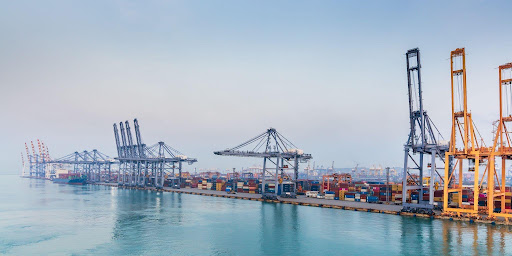
For businesses exporting through Laem Chabang Port, warehouse location is an important factor in managing logistics costs, delivery schedules and supply chain efficiency. The distance between a warehouse and the port can affect trucking time, container turnaround and the ability to meet shipping cut-off times.
As Thailand continues to attract manufacturing investment and strengthen its role in regional supply chains, businesses operating along the Eastern Economic Corridor (EEC) are increasingly considering how warehouse locations fit into their wider logistics networks. For exporters, choosing a site closer to the port can be one way to simplify the movement of goods from storage to shipment, depending on their operational requirements and distribution routes.
In Si Racha, Chonburi, SCX Logistics, the warehouse business of SCX Corporation, is developing its presence near Laem Chabang Port through two sites: Laemchabang 1, which is operating with approximately 47,000 sqm of leasable space, and Laemchabang 2, which is under construction with approximately 42,000 sqm of additional space.
The problem: the road to the port is costing more than the rent
Buyers are asking for shorter lead times. Shipping lines hold firm on cut-offs. And every hour a truck spends between a warehouse and the terminal is an hour paid for. Container trucking near a port is priced by truck time, so a site that allows half as many round trips per shift roughly doubles the truck time behind each box. A delay of an hour on a long run can push a container onto the next sailing, with storage, rebooking and an unhappy buyer to follow.
The pressure lands differently on three groups of businesses now looking at Thailand’s Eastern Seaboard.
Manufacturers relocating to Thailand under China+1. Companies moving part of their production from China need to ship reliably from the first month. Under time pressure, many take the first available warehouse, then find the trip to the port eating the margin they relocated for. Many also need factory space or a custom layout that a standard building does not offer.
Exporters in the Eastern Economic Corridor. Factories in Chonburi and Rayong already sit near the coast, yet finished goods often travel back toward Bangkok for storage before heading to the port. That extra leg adds truck hours, cut-off risk and empty-container moves.
Third-party logistics providers. For a 3PL, port turnaround is the service it sells. Every lost trip per truck is a cost it either absorbs or passes to its own customers. When a client asks for faster export turnaround, the location of the 3PL’s warehouse is often the first thing that limits what it can promise.
How SCX addresses it
SCX’s answer is to put the warehouse where the containers are going. Its Laem Chabang cluster gives each of these groups a different route in.
For China+1 manufacturers, SCX leases both ready-built and built-to-suit space. Ready-built gives a company a proven building on a firm timeline to start shipping. Built-to-suit gives one whose process needs a specific layout a building designed around it. Laemchabang 2 also combines warehouse and factory buildings on one plot, so storage and production can sit side by side.
For EEC exporters, both sites sit in Si Racha District, cutting out the trip back toward Bangkok. Shorter legs between depot, warehouse and terminal also reduce the time an empty container is held, and with it the risk of detention charges.
For 3PLs, Laemchabang 1 is operating now, with buildings from 4,200 to 13,000 sqm in its general zone, while Laemchabang 2 adds capacity in the same district as their contracts grow.
The evidence: what is on the ground
SCX Logistics Laemchabang 1, on Highway 3009 in Si Racha, is operating with around 47,000 sqm of leasable space. SCX Logistics Laemchabang 2, on Nong Khla Mai Road in Bueng, Si Racha, is under construction with around 42,000 sqm. Both are developed with Tokyo Tatemono, SCX’s partner in logistics.
Laemchabang 2 is specified as follows:
| Warehouse | Factory | |
| Floor loading | 4 tons/sqm | 3 tons/sqm |
| Clear height | 12 m | 10 m |
| Floor raised by | +1.30 m | +0.30 m |
| Loading docks | 1 dock and leveller per 1,000 sqm | — |
The 4-ton warehouse floor takes heavy racking and handling equipment directly on the slab. The 12 m clear height lets tenants stack upward before they need more floor area. EV chargers and LED lighting are provided.
The two Laem Chabang sites sit within a wider SCX Logistics portfolio of seven warehouse sites in Thailand, with around 250,000 sqm of leasable space, including two sites on Bangkok’s Bangna–Trad Road corridor. For businesses whose volume goes mainly to customers in Bangkok, SCX can point them there instead. Many operators run both: one base near the port for export, one near the city for domestic delivery.
Quick questions
Why does distance to Laem Chabang Port affect export costs?
Container trucking is priced mainly by truck time. A warehouse closer to the port lets one truck finish more round trips per shift, so the cost of each container falls.
Does SCX have warehouse space near Laem Chabang Port available now?
Yes. SCX Logistics Laemchabang 1 operates on Highway 3009 in Si Racha with around 47,000 sqm of leasable space. Laemchabang 2, on Nong Khla Mai Road in Bueng, is under construction with around 42,000 sqm.
Can manufacturers relocating to Thailand get factory space or a custom layout?
Yes. SCX leases ready-built and built-to-suit space, and Laemchabang 2 combines warehouse and factory buildings on one plot.
What floor loading does Laem Chabang 2 offer?
4 tons per square metre in the warehouse buildings and 3 tons per square metre in the factory buildings, with clear heights of 12 m and 10 m.
About SCX Corporation
SCX Corporation, a subsidiary of SC Asset Corporation Public Company Limited, serves as SC Group’s second engine of growth, building resilient recurring income businesses that support the Group’s long-term sustainable growth. Its portfolio comprises SCX Logistics, SCX Hospitality and SCX Working Solutions, spanning warehouses and logistics facilities, hotels, office properties and clean energy solutions. Guided by its vision, ‘The Prospering Expedition’, and mission, ‘For The Way Forward’, SCX creates long-term value through investment, development and strategic partnerships.
For more information, visit www.scx.co.th.
-

 HEALTH3 years ago
Transformative Health Solutions: Unveiling the Breakthroughs of 10x Health
-

 Posts3 years ago
Siegel, Cooper & Co.
-

 GENERAL3 years ago
Discovering the Artistic Brilliance of Derpixon: A Deep Dive into their Animation and Illustration
-

 Lifestyle3 years ago
Purenudism.com: Unveiling the Beauty of Naturist Lifestyle
-

 FASHION3 years ago
The Many Faces of “λιβαισ”: A Comprehensive Guide to its Symbolism in Different Cultures
-

 Lifestyle3 years ago
BaddieHub: Unleashing Confidence and Style in the Ultimate Gathering Spot for the Baddie Lifestyle
-

 Home improvement2 years ago
Unleash Your Creative Side: Exploring Stylish Rug Collections to Elevate Your Space with Quality Rug & Carpet Options
-

 PETS2 years ago
From Bows to Bandanas: Elevate Your Dog’s Style Game with These Trendy Accessories