
BUSINESS
Why Do Diamonds with Better Clarity Often Cost More?


Throughout history, diamonds have reflected great beauty, wealth, and elegance. Knowing the essential features of diamonds is critical whether you’re buying it to commemorate a special event or hoping to invest in one. Diamond clarity is one of the most important aspects that determine the value and beauty of a diamond. However, why do people tend to pay more for a diamond with better clarity? This post examines the peculiar diamond clarity and pricing relationship, especially when shopping on reputable sites like Rare Carat.
Understanding Diamond Clarity
Like other graded gems, diamonds also have levels, and clarity is defined as the absence of inclusions and blemishes. If you’re using Rare Carat, where clarity grading is clearly defined and easy to compare across listings
The more flaws a diamond possesses, the higher grade it will be. The way these imperfections affect light to penetrate the stone will directly impact the shine, beauty and brilliance of the diamond. Rest assured, size, number, and visibility of imperfections in a diamond’s clarity is measured by an assigned grade; starts from Flawless (FL) to Included (I).
Clarity grades are measured with 10x magnification, which is the lowest setting on many modern microscopes, and the best diamonds have no visible inclusions at this level. Rare, valuable diamonds typically have a greater clarity grade, further increasing their pricing.
Major Aspects that Influence the Clarity of Diamonds
These criteria have a strong influence on grading the clarity of diamonds:
– Size of Inclusions: Lesser inclusions are harder to see, whereas greater ones stand out more, making it easy for any observer to spot them.
– Number of Imperfections: Several small imperfections are easier to spot than one large scratch because of the effort it would take to zoom in to see imperfections underneath the diamond.
– Location of Imperfections: Inclusions placed at the edge of a ring affect its appeal, but those at the middle lose the diamond’s shine.
– Type of Imperfections: Some inclusions are too big to ignore and will result in the stone’s rating plummeting, given how thick or dark the carbon spots are.
In What Ways Does Clarity Presence Affect Diamond Pricing?
The more a diamond’s clarity grade increases, the more expensive it becomes due to a mixture of rarity, desirability, and beauty. Let’s examine how clarity affects pricing further:
- Rarity: Diamonds with fewer imperfections are far rarer than those with more visible flaws. Diamonds that are either flawless or have only small inclusions are far less common in nature. Because of their limited availability, flawless diamonds often sell at premium prices.
- Beauty and Brilliance: Diamonds with greater clarity possess a more intense sparkle. The more inclusions there are in a diamond, the light it lets through is reduced. Diamonds with minimal inclusions reflect light off its surface which boosts the diamond’s brilliance. Therefore, diamonds with higher clarity are more visually appealing and that justifies the higher price tag.
- Higher Demand: The general public prefers diamonds with higher clarity grades more than those with lower clarity diamonds. Fear of losing out on highly clear and perfect looking diamonds raises the demand for high-clarity diamonds. Thus, pushing the price of high-clarity diamonds higher in the market.
Rare Carat: A Guide to Clarity and Shopping for Diamonds
When considering buying diamonds, Rare Carat offers an incredibly unmatched array of diamonds, as well as stands out in terms of reliability. To guarantee that every stone is graded systematically, they implement diamond grading transparency. Another significant advantage of Rare Carat is that they have a comparison tool to crosscheck clarity grade and value. Not only does this allow for alignment with preference, but enables avoidance of overpayment.
Customer satisfaction stems from the platform’s ease of navigation and enhances the likelihood of informed purchases, making Rare Carat the customer’s first choice. Shopping knowing the clarity, quality, and price are in the right mix makes Rare Carat the best.
Why Do Diamonds with Better Clarity Cost More?
Graded clarity diamonds tend to be more expensive due to the blend of scarcity, demand, and beauty. Let us try to understand these factors:
Rarity
“Flawless” diamonds are comparably rare. This is mainly the reason why such diamonds are priced much higher than those with visible flaws. There is very little supply of below par diamonds, making them favorable picks for investors and lenders. The lack of availability of certain diamonds drives their cost in the marketplace.
Aesthetic Appeal and Light Reflection
Due to higher clarity, premium diamonds are more likely to be brilliant because fewer inclusions are blocking light from traveling through the diamond. Rihanna, for instance, has a 15-carat blue diamond engagement ring, exemplifying the radiant light reflection that an appealing diamond possesses. Inclusions not only block light from entering, but they also lower the price. These crystals grab a lot of attention and due to that, they become more captivating.
Demand Surge and Customer View
With diamonds, consumers almost always equate an increase in clarity as an increase in quality. Therefore, diamonds that are less ‘imperfect’ are increasingly in demand, particularly for engagement rings and special occasions where the aesthetics of the diamond is of utmost importance. The desire from consumers to purchase high-clarity diamonds leads to an increased market price due to the high demand and consumer tendency towards prefered flawless stones.
Is Choosing Higher Clarity the Best Decision?
Besides the infrequent exceptions, diamonds with a higher clarity grading tend to carry a higher price, but it is prudent to remember that clearer diamonds do not execute the best value. Other parameters such as the cut, color, and carat weight significantly impact the diamond’s overall attractiveness as well.
For instance, VS1 or VS2 grade diamonds offer great price efficiency because these diamonds can still appear to be flawless at a reasonable distance, with the added benefit of being less expensive compared to higher-tier diamonds. Partnering with Rare Carat offers you the chance to filter and sort diamonds by all the important criteria, giving you the opportunity to choose the best balance between utmost clarity, cut and others.
Conclusion
The price of diamonds with better clarity often cost more because they are enhanced visually, in greater demand, and quite rare. The price of such diamonds will always be high because they are perceived as perfect and radiant. Keep in mind, however, that clarity is but one of the numerous aspects that define a diamond’s value. At Rare Carat, you can discover a diamond that perfectly aligns with your personal taste, budgetary considerations, and clarity level.
You can rest assured that diamond shopping with Rare Carat will be simple, painless, and rewarding, giving you full confidence in your decision crafted around your preferences.
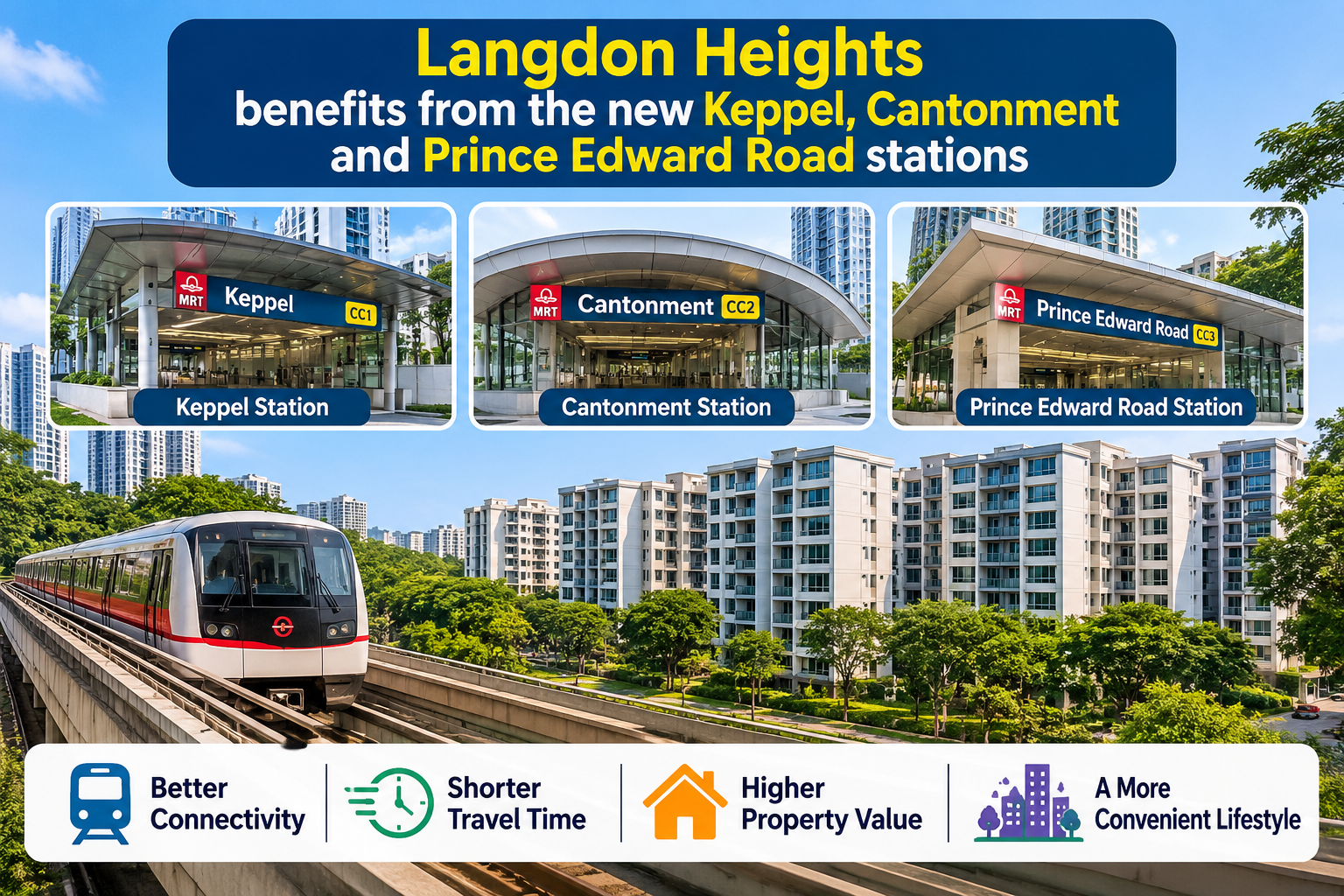
In Singapore, the value of a well-connected address extends beyond its nearest MRT station. It also reflects how effectively the wider rail network brings employment centres, established neighbourhoods and emerging destinations within reach. For Langdon Heights, the new condominium at Dover Drive by Forsea Holdings, Qingjian Realty and Jianan Capital, the addition of Keppel, Cantonment and Prince Edward Road stations introduces a compelling dimension to its connectivity story.
The three stations form the Circle Line extension between HarbourFront and Marina Bay, closing the remaining gap in the orbital route. Their significance for a Dover Drive home is therefore not immediate doorstep proximity, but broader network access. By strengthening connections across the southern city, the extension gives residents more ways to approach business appointments, leisure plans and everyday journeys from their established western base.
How Langdon Heights Benefits From a More Complete Circle Line
Dover sits within a western corridor where the East West Line and Circle Line work together to support travel across Singapore. Buona Vista is an important interchange between these two lines, offering a connection towards the Circle Line’s southern arc. The new stations extend the usefulness of that arc beyond HarbourFront, linking it through Keppel and the Tanjong Pagar area towards Marina Bay.
For residents, the appeal lies in having a more versatile network rather than relying on a single preferred route. Depending on the destination, reaching the southern city through the Circle Line may offer a useful alternative to travelling through other central interchanges. Actual convenience will depend on the starting point, transfers and final walking distance, but the expanded choice is itself a meaningful advantage.
Keppel Adds Another Gateway to the Southern Waterfront
Keppel station brings another point of rail access to Singapore’s southern waterfront corridor. For households based at Dover Drive, this adds flexibility when planning visits to the Keppel area and nearby destinations. It also broadens the range of places that can be considered within a rail-based itinerary, whether for a weekday meeting or an unhurried weekend outing.
The distinction matters because waterfront connectivity is not simply about reaching one landmark. Different destinations are served by different stations, and an additional access point can make the final part of a journey more practical. As the southern waterfront evolves, Keppel’s role within the Circle Line gives Langdon Heights residents another connection to a district attracting sustained attention, without requiring them to live within it.
Cantonment Strengthens Access to a Layered City District
Cantonment adds a new rail gateway to the wider Tanjong Pagar area, where commercial activity sits alongside heritage streets, dining destinations and established residential neighbourhoods. For residents travelling from Dover, the station expands the options for reaching this richly layered part of Singapore. Its usefulness will vary by destination, complementing rather than replacing existing access through other stations.
This is particularly relevant to households whose city routines extend beyond office hours. A professional engagement may be followed by dinner, while a weekend visit might combine errands with time spent exploring the surrounding streets. An additional station allows such journeys to be planned around the destination itself, making the southern city more adaptable to different schedules and preferences.
Prince Edward Road Extends Connections Towards the City Core
Prince Edward Road station adds another access point around the southern edge of the central business district. Together with Keppel and Cantonment, it helps bridge the stretch between HarbourFront and Marina Bay. For Langdon Heights, this reinforces a broader proposition: a home in Dover can remain connected to central employment and lifestyle destinations through an increasingly integrated rail network.
Residents with appointments across different parts of the city may appreciate having another station to consider when choosing their route. The most suitable journey will still depend on the building or venue involved. Rather than assuming every trip becomes faster, the stronger benefit is flexibility, with more opportunities to match the rail journey to the actual destination.
A Western Home With Broader Southern Reach
The appeal of these three stations is especially clear when viewed alongside Dover’s position in the west. Residents need not choose a southern city address to benefit from improvements there. Langdon Heights offers a different balance: a residential base at Dover Drive, with access to a wider transport system that supports movement towards both established centres and evolving districts.
That balance can suit households with varied routines. One resident may travel towards western employment nodes, while another regularly visits the central business district or waterfront. A more complete Circle Line supports this diversity of movement. It does not make every destination equally close, but it helps create a network with greater breadth and more route choices.
Reading the Connectivity Advantage With Confidence
For prospective buyers, the clearest way to assess the benefit is to consider real journeys: the connection from the development to rail services, the interchange involved and the walk at the destination. Keppel, Cantonment and Prince Edward Road should be understood as network enhancements, not nearby stations or a promise of guaranteed capital appreciation.
Within that measured perspective, the headline advantage remains persuasive. Langdon Heights benefits from three new stations because they strengthen the reach of the network serving its wider location. For buyers seeking a Dover Drive home with connections extending towards Singapore’s southern waterfront and city core, the completed Circle Line connection adds another considered reason to look closely.
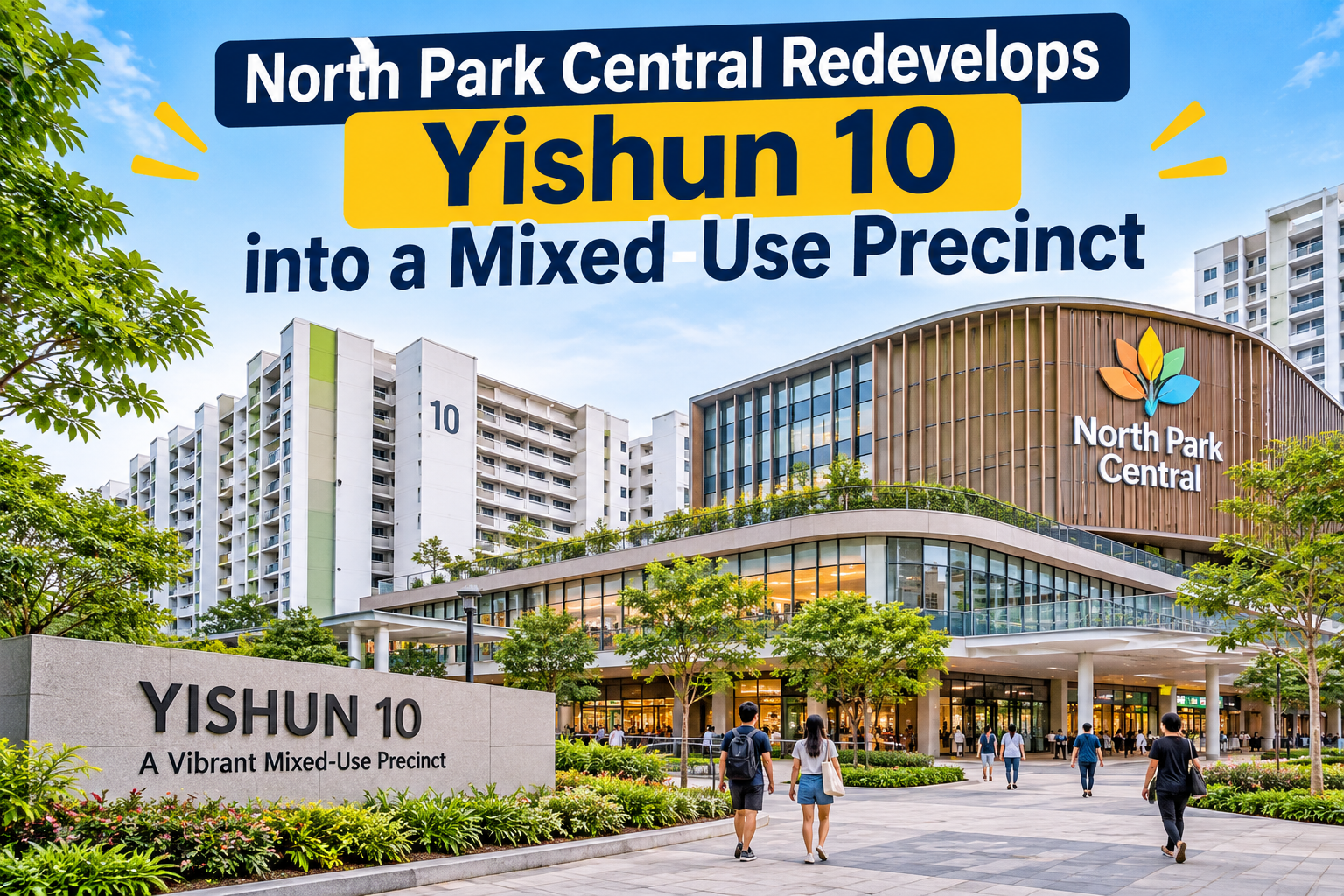
North Park Central Reimagines Yishun 10 Through Mixed Use
The redevelopment of Yishun 10 presents an opportunity to give a familiar address a broader role in the neighbourhood’s daily life. With North Park Central, a new condominium at Yishun Central 1 by Frasers Property, the story centres on more than new homes. It is about the transition towards a mixed-use precinct, where residential life and complementary urban activities can form a more connected whole. For Yishun, this represents a fresh chapter shaped around the way people increasingly want to live: close to everyday needs, within an established community.
The appeal of this transformation lies in its setting. Rather than introducing a residential enclave detached from its surroundings, redevelopment at Yishun 10 brings the conversation back to the town centre. How can a recognisable site serve more people throughout the day? How can new homes contribute to the neighbourhood beyond their private boundaries? These questions give the project its significance, positioning mixed-use redevelopment as an opportunity to enrich an existing urban centre rather than simply replace one building with another.
North Park Central Gives Yishun 10 a Broader Purpose
A mixed-use precinct brings different aspects of daily life into closer relationship. Instead of treating housing, commerce and neighbourhood activity as separate destinations, it considers how they can support one another within a cohesive setting. At Yishun 10, that approach offers a compelling direction for renewal. The site’s next chapter can be understood not just through its residential component, but through its potential to accommodate a wider rhythm of use, bringing together the privacy of home and the energy of a town-centre address.
For prospective homeowners, this creates a different way of evaluating the development. The attraction is not solely the residence itself, but how that residence relates to its immediate surroundings. A thoughtfully conceived mixed-use environment can make everyday routines feel less fragmented, with fewer transitions between domestic life and neighbourhood activity. The precise experience will depend on the final development configuration and commercial mix, but the underlying proposition is clear: a home that participates in the life of Yishun rather than standing apart from it.
Town Centre Renewal Builds on an Established Setting
Redeveloping within an established town calls for a measured balance between change and continuity. Yishun already has its own patterns of movement, familiar destinations and community routines. A new precinct should respond to those existing qualities while introducing spaces suited to contemporary expectations. At Yishun Central 1, the opportunity is therefore not to manufacture a neighbourhood identity from the ground up, but to add a new layer to an address that already belongs to the local urban landscape.
This is where the redevelopment angle becomes particularly meaningful. Renewal can bring a more purposeful relationship between a site and the streets around it, especially when different uses are considered together. Building entrances, transitions between public and private areas, and the way people approach the precinct all influence whether a development feels integrated or isolated. While individual design details should be assessed against released plans, these are the qualities that will matter in translating the mixed-use vision into an appealing everyday environment.
A Precinct Shaped Around Different Daily Rhythms
The strongest mixed-use settings are not defined only by the number of functions they contain. Their appeal comes from how naturally those functions coexist. Residents need a sense of retreat, while commercial and shared areas benefit from accessibility and activity. Bringing these requirements together demands thoughtful planning. For the Yishun 10 redevelopment, the promise of precinct living rests on achieving that balance: allowing the address to feel connected and lively without compromising the distinction between a private home and the wider neighbourhood.
Connecting Residential Privacy With Urban Activity
For a premium residential offering, convenience should feel considered rather than overwhelming. The ideal is a comfortable transition from the activity of the surrounding town centre to the quieter atmosphere of home. Clear circulation, legible access and appropriate separation between uses are therefore important considerations when reviewing a mixed-use development. They help determine whether the benefits of a central address translate into genuine residential ease. This perspective keeps the focus on liveability, rather than treating mixed use as a label in itself.
Creating Relevance Beyond the Residential Boundary
A precinct also has a relationship with people who do not live within it. Its wider contribution depends on how well it connects with the neighbourhood and supports useful activity. Where complementary uses are planned, their relevance to local needs can help the redevelopment become part of everyday routines. That is an important distinction for Yishun 10: its transformation has the potential to create an address valued not only by homeowners, but also by the community around it.
A New Residential Chapter Within Yishun’s Evolving Centre
North Park Central brings the residential dimension into this larger redevelopment narrative. For buyers considering a home at Yishun Central 1, the meaningful question is how the completed precinct will unite its different roles. The final plans, arrangement of uses and relationship with surrounding streets will deserve close attention. Together, they will shape an experience that extends beyond the apartment, influencing how naturally residents move between home and the established life of the town.
The redevelopment of Yishun 10 is ultimately a story of renewed purpose. By moving towards a mixed-use precinct, the address offers a framework for bringing new homes and neighbourhood activity into closer alignment. Frasers Property’s North Park Central sits at the heart of that next chapter, with an appeal rooted in connection rather than separation. It is a vision of town-centre living that builds on Yishun’s existing identity while opening the door to a more integrated residential future.

Titanium dioxide (TiO₂) is an important industrial compound widely used in chemical engineering, plastics manufacturing, packaging, cosmetics, paints, and coatings. Known for its excellent whiteness, brightness, opacity, and light-scattering properties, it plays a significant role in improving the appearance, performance, and durability of numerous everyday products. From plastic packaging and household goods to personal care products and industrial coatings, titanium dioxide offers manufacturers a versatile material for meeting different production requirements.
As industries continue to develop more advanced materials and improve product quality, the demand for reliable titanium dioxide continues to grow. Understanding its properties, manufacturing processes, grades, and applications can help businesses select the right material for their specific needs.
What Is Titanium Dioxide?
Titanium dioxide is a naturally occurring inorganic compound composed of titanium and oxygen. Its chemical formula is TiO₂. It is commonly available as a fine white powder and is valued for its high refractive index, strong opacity, chemical stability, and resistance to ultraviolet radiation.
Commercial titanium dioxide is primarily produced through two manufacturing processes: the sulfate process and the chloride process. Both methods produce titanium dioxide, although they differ in raw materials, processing techniques, and environmental considerations.
Titanium dioxide occurs naturally in several crystalline forms, with rutile and anatase being the most commercially important. Rutile generally offers a higher refractive index and is widely used in applications requiring excellent opacity, weather resistance, and durability. Anatase is used in selected applications where its particular optical and surface properties are beneficial.
Major Properties of Titanium Dioxide
The popularity of titanium dioxide across different industries comes from its combination of physical and chemical characteristics.
- Excellent Whiteness and Brightness
Titanium dioxide provides strong white pigmentation, making it suitable for products that require a clean, bright, and consistent appearance. Manufacturers use it to improve the visual quality of plastics, paints, paper, and cosmetic formulations.
- High Opacity and Hiding Power
One of its most valuable characteristics is its ability to scatter visible light effectively. This helps products achieve better coverage and opacity without requiring excessive pigment loading. In plastics and coatings, this property supports consistent colour and appearance.
- UV Protection
Certain titanium dioxide grades can help protect materials from ultraviolet radiation. This is particularly useful in outdoor plastic products, protective coatings, and packaging materials that may experience prolonged sunlight exposure. Surface-treated rutile grades are often selected for improved performance in these applications.
- Chemical Stability
Titanium dioxide is chemically stable under many normal processing and application conditions. This makes it suitable for various industrial formulations where consistent performance and material durability are important.
Applications in the Plastics Industry
The plastics industry is one of the major consumers of titanium dioxide. Manufacturers incorporate the pigment into polyethylene (PE), polypropylene (PP), PVC, and other polymer-based materials to improve whiteness, opacity, and visual consistency.
In plastic manufacturing, titanium dioxide is commonly used in:
- Plastic films and sheets.
- Household plastic products.
- Automotive plastic components.
- Pipes and construction materials.
- Plastic containers and storage products.
- Injection-moulded products.
- Agricultural films and outdoor plastic applications.
For example, manufacturers producing white plastic containers require pigments that deliver consistent colour and good hiding power. Titanium dioxide helps achieve these characteristics while supporting the desired appearance of the finished product.
The selection of an appropriate grade depends on polymer compatibility, processing temperature, dispersion properties, and the intended application. Proper pigment dispersion is particularly important because poorly distributed particles can create uneven colour and reduce the overall quality of the finished plastic.
Importance in Packaging Manufacturing
Packaging manufacturers use titanium dioxide to improve the appearance and functional characteristics of different packaging materials. Its high opacity and whiteness make it useful in plastic bottles, food packaging, cosmetic containers, films, and other consumer packaging products.
White packaging can provide a clean and professional appearance while helping conceal the contents of a container when required. Titanium dioxide can also contribute to protecting certain packaging materials against UV exposure, depending on the formulation and pigment grade.
In flexible packaging, manufacturers carefully balance pigment concentration, film thickness, mechanical properties, and processing requirements. The objective is to achieve the required opacity and appearance without unnecessarily affecting flexibility, strength, or production efficiency.
Choosing the correct pigment grade is therefore an important part of packaging formulation and quality control.
Uses in Cosmetics and Personal Care Products
Titanium dioxide also has an established role in the cosmetics and personal care industry. It is used in selected formulations to provide whiteness, opacity, coverage, and other functional benefits.
Common cosmetic applications include:
- Foundations and face powders.
- Concealers and pressed powders.
- Creams and lotions.
- Colour cosmetics.
- Sunscreen formulations.
- Certain personal care products.
In sunscreen products, appropriately manufactured and formulated titanium dioxide can function as a UV filter. Its performance depends on particle characteristics, surface treatment, formulation, and applicable regulatory requirements.
Cosmetic manufacturers must select grades specifically designed and approved for their intended use. Not every industrial titanium dioxide grade is suitable for cosmetic applications. Particle size, purity, surface coating, safety assessments, and local regulatory standards must all be considered before incorporating the material into a personal care formulation.
Understanding Rutile Titanium Dioxide Pigment
Rutile is one of the most widely used crystalline forms of titanium dioxide in industrial manufacturing. Its high refractive index makes it particularly effective at scattering light, which contributes to excellent opacity and whiteness.
Manufacturers frequently choose rutile titanium dioxide pigment for applications requiring strong hiding power, consistent colour, and long-term performance.
Depending on its surface treatment and formulation, rutile titanium dioxide can provide several advantages:
- Excellent whiteness and brightness.
- Strong opacity and hiding power.
- Good dispersion characteristics.
- Improved weather resistance in suitable grades.
- Effective performance in plastic and coating formulations.
- Consistent appearance in finished products.
Surface treatments involving materials such as alumina and silica may be applied to improve specific performance characteristics. These treatments can influence dispersibility, durability, and compatibility with different manufacturing systems.
Selecting the appropriate rutile grade requires consideration of the intended application, production equipment, processing conditions, and required product specifications.
How to Choose Reliable Titanium Dioxide Distributors
Selecting the right supplier is an important decision for manufacturers that depend on consistent raw material quality. Reliable titanium dioxide distributors can help businesses source suitable grades for their production requirements.
Before choosing a distributor, manufacturers should consider several important factors:
Product Quality and Specifications: Review technical data sheets and product specifications, including TiO₂ content, whiteness, particle size, surface treatment, and other relevant properties.
Grade Availability: Different industries require different pigment characteristics. A suitable supplier should offer grades that match the requirements of plastics, packaging, coatings, or other applications.
Consistency Between Batches: Consistent raw material quality is essential for maintaining production standards and avoiding unexpected variations in finished products.
Technical Support: Access to technical information and application guidance can help manufacturers identify suitable grades and improve formulation performance.
Supply Reliability: Consistent availability, appropriate packaging, and dependable delivery arrangements are important considerations for businesses managing large-scale manufacturing operations.
Manufacturers can explore product information and available titanium dioxide solutions through Tio2Manufacturer.com.
Environmental and Safety Considerations
Although titanium dioxide offers valuable industrial properties, responsible handling and manufacturing practices remain important. Businesses should follow the relevant safety data sheets, workplace exposure requirements, and applicable environmental regulations.
Fine titanium dioxide powder can create airborne dust during handling, weighing, and mixing. Appropriate ventilation, dust-control systems, personal protective equipment, and good housekeeping practices help reduce occupational exposure.
Regulatory requirements may also differ according to the intended application. Industrial, food-contact, and cosmetic uses can have different quality and compliance requirements. Manufacturers should therefore verify that the selected grade meets the standards applicable to their products and target markets.
Conclusion
Titanium dioxide remains an essential material across modern chemical engineering, plastics, packaging, and cosmetics industries. Its excellent whiteness, opacity, light-scattering ability, and chemical stability make it a valuable ingredient in a wide range of manufacturing processes.
Rutile titanium dioxide is particularly important for applications requiring strong hiding power, durability, and consistent appearance. However, choosing the correct grade and working with a dependable supplier are equally important for achieving reliable production results.
As manufacturing technologies continue to advance, titanium dioxide will remain an important component in developing high-quality plastics, packaging materials, coatings, and personal care products. Businesses that understand its properties and application requirements can make better material-selection decisions and improve the consistency of their finished products.
-

 HEALTH3 years ago
Transformative Health Solutions: Unveiling the Breakthroughs of 10x Health
-

 Posts3 years ago
Siegel, Cooper & Co.
-

 GENERAL3 years ago
Discovering the Artistic Brilliance of Derpixon: A Deep Dive into their Animation and Illustration
-

 Lifestyle3 years ago
Purenudism.com: Unveiling the Beauty of Naturist Lifestyle
-

 FASHION3 years ago
The Many Faces of “λιβαισ”: A Comprehensive Guide to its Symbolism in Different Cultures
-

 Home improvement2 years ago
Unleash Your Creative Side: Exploring Stylish Rug Collections to Elevate Your Space with Quality Rug & Carpet Options
-

 Lifestyle3 years ago
BaddieHub: Unleashing Confidence and Style in the Ultimate Gathering Spot for the Baddie Lifestyle
-

 PETS2 years ago
From Bows to Bandanas: Elevate Your Dog’s Style Game with These Trendy Accessories