
BUSINESS
Lead Generation Packages for B2B Success


Companies deal with unpredictable pipelines more often than they’d like. One month looks great, the next one is quiet. That kind of inconsistency slows growth and makes forecasting tough. Lead generation packages solve this by providing businesses with a repeatable, structured system rather than scattered efforts. You get clarity on what’s being done, who’s being targeted, and when results should show up.
What’s Typically Included in B2B Lead Generation Packages
A solid package covers every step required to find and engage the right buyers. It keeps outreach unified, consistent, and tied to your Ideal Customer Profile.
- Prospect research & ICP refinement: This begins with defining the right prospects. A team reviews your ICP, analyzes markets, and builds targeted lists of decision-makers. The goal is to make sure outreach focuses on companies that actually match your offer.
- Multi-channel outreach (email, LinkedIn, calls): Reaching prospects through several channels increases response rates. Packages usually include coordinated outreach via email, LinkedIn, and phone, ensuring your message reaches prospects where they prefer to communicate.
- Messaging creation & personalization: Strong outreach depends on relevant, human-sounding messaging. Teams write email sequences, LinkedIn scripts, and calling guides tailored to your industry. Personalization is added to help you stand out from generic campaigns.
- Data validation, enrichment, and QA: Good data is at the core of predictable results. Every contact is checked, verified, and enriched to reduce bounce rates and avoid wasted outreach. Ongoing QA keeps campaigns clean and compliant.
Learn more about the key cost drivers behind lead generation services, how different package tiers influence overall spend, and what factors businesses should evaluate before choosing an option.
Types of Lead Gen Packages
Lead generation isn’t one-size-fits-all. Different companies have different levels of readiness, sales cycles, and goals, so packages are built to match those stages. Below are the three most common options, along with the types of businesses they’re designed for.
Pilot Package
A pilot package is the safest starting point for teams that want to test outbound without committing to a long-term plan. It’s ideal for companies that are exploring a new ICP, entering a fresh market, or simply unsure how well outbound will work for their offer.
This option usually runs for one to two months and focuses on a smaller volume of outreach. The goal is fast learning. You see which messaging resonates, which titles get the most replies, how long the sales cycle feels, and whether your product speaks to the prospects you’re targeting.
The pilot package works especially well for startups, companies launching new products, or B2B teams that have relied primarily on referrals and inbound and want to add outbound without risk.
Growth/Business Package
The business growth package is for companies that already know their ICP and want predictable monthly meetings. It’s built for teams that need stability: steady outreach, steady performance, and a precise monthly flow of qualified conversations.
This package usually includes larger volumes of research, multi-channel outreach, richer personalization, and ongoing optimization. It’s the sweet spot for most B2B companies.
Sales teams benefit the most here: SDRs get a reliable stream of leads instead of scrambling for prospects, and founders no longer rely on sporadic outreach. If your next step is scaling revenue, increasing deal flow, or shortening the gap between closed deals, this package is a strong fit.
Enterprise Package
Enterprise packages are built for companies with broad territories, complex buyer journeys, or aggressive growth goals. They’re designed for teams that need outbound running across multiple markets, industries, or product lines simultaneously.
These packages handle high outreach volumes, deeper levels of research, and custom workflows integrated with internal systems. They often include multiple SDRs, multilingual outreach, advanced reporting, and detailed performance tracking.
Enterprise fits companies with mature sales operations, larger teams, or VP-level growth targets where consistency, scale, and cross-market coverage are non-negotiable. It’s the best choice for organizations that treat outbound as a long-term engine rather than a temporary boost.
Key Factors to Consider When Choosing a Package
Choosing the right lead generation package comes down to understanding what your team needs today and what will matter in a few months. A package should match your goals, support your sales process, and give you the level of control you want over results. Here are the core factors to look at before committing to anything:
- Monthly lead/meeting volume: Ensure it aligns with your sales capacity. Too few meetings slow growth, but too many can overwhelm a small team. The right package fits your bandwidth and revenue targets.
- Channel mix: Effective outbound uses multiple channels. Packages that combine email, LinkedIn, and phone outreach usually bring stronger response rates. Check if the provider adapts the mix to your audience.
- Quality of data and research standards: Strong results depend on accurate contact data. Look for manual research, verification steps, and clear QA practices. Poor data leads to bounces, low reply rates, and wasted time.
- Industry-specific expertise: If your market is niche or technical, the team running your outreach should understand it. Familiarity with your industry improves messaging, targeting, and overall performance.
When these factors align, a lead generation package becomes a reliable growth engine rather than an experiment.
Conclusion
Structured packages give companies a clear path to steady growth. Instead of chasing inconsistent outreach or guessing what to try next, you get a system that delivers qualified conversations every month. The research, messaging, outreach, and reporting all work together, making results easier to track and improve.
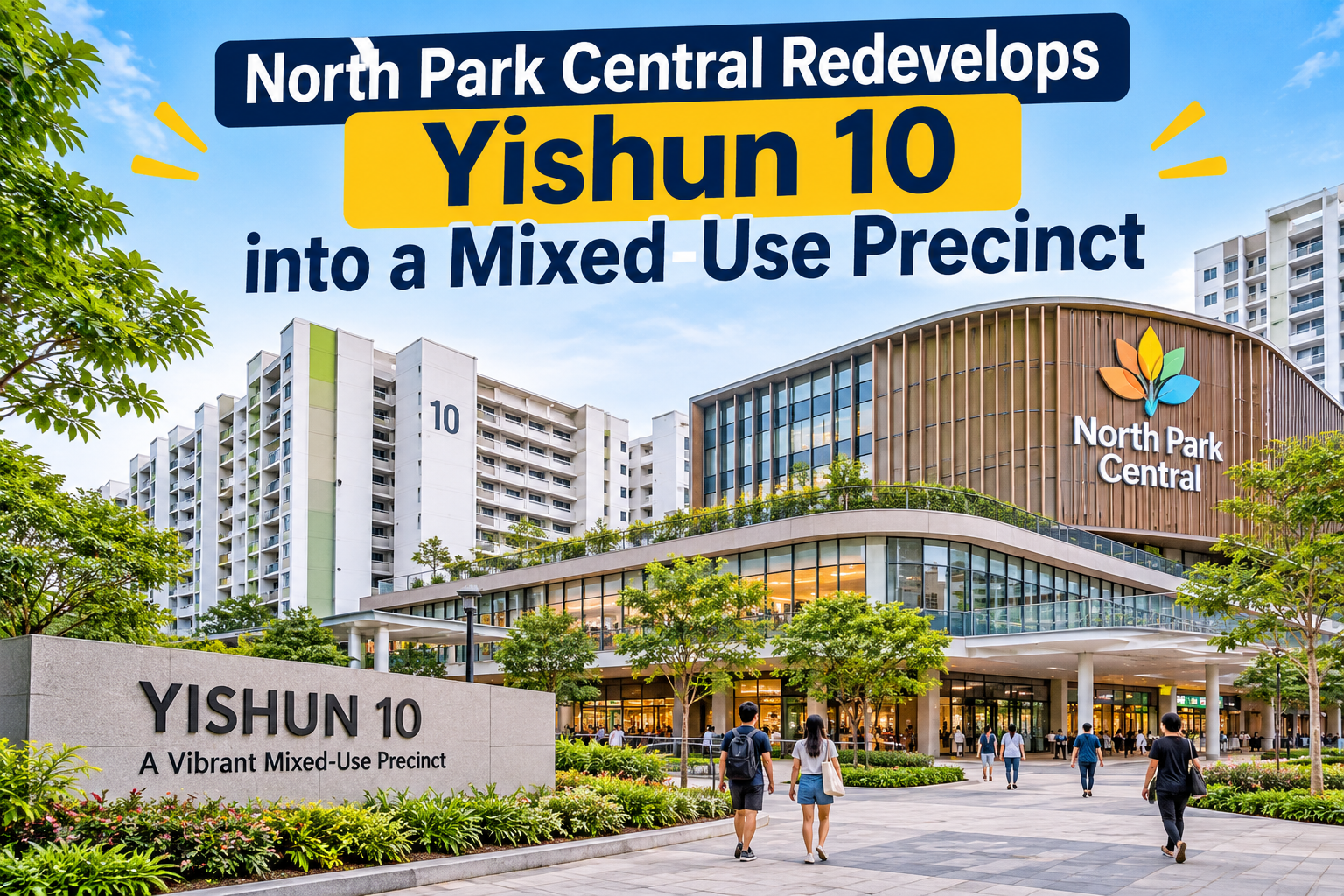
North Park Central Reimagines Yishun 10 Through Mixed Use
The redevelopment of Yishun 10 presents an opportunity to give a familiar address a broader role in the neighbourhood’s daily life. With North Park Central, a new condominium at Yishun Central 1 by Frasers Property, the story centres on more than new homes. It is about the transition towards a mixed-use precinct, where residential life and complementary urban activities can form a more connected whole. For Yishun, this represents a fresh chapter shaped around the way people increasingly want to live: close to everyday needs, within an established community.
The appeal of this transformation lies in its setting. Rather than introducing a residential enclave detached from its surroundings, redevelopment at Yishun 10 brings the conversation back to the town centre. How can a recognisable site serve more people throughout the day? How can new homes contribute to the neighbourhood beyond their private boundaries? These questions give the project its significance, positioning mixed-use redevelopment as an opportunity to enrich an existing urban centre rather than simply replace one building with another.
North Park Central Gives Yishun 10 a Broader Purpose
A mixed-use precinct brings different aspects of daily life into closer relationship. Instead of treating housing, commerce and neighbourhood activity as separate destinations, it considers how they can support one another within a cohesive setting. At Yishun 10, that approach offers a compelling direction for renewal. The site’s next chapter can be understood not just through its residential component, but through its potential to accommodate a wider rhythm of use, bringing together the privacy of home and the energy of a town-centre address.
For prospective homeowners, this creates a different way of evaluating the development. The attraction is not solely the residence itself, but how that residence relates to its immediate surroundings. A thoughtfully conceived mixed-use environment can make everyday routines feel less fragmented, with fewer transitions between domestic life and neighbourhood activity. The precise experience will depend on the final development configuration and commercial mix, but the underlying proposition is clear: a home that participates in the life of Yishun rather than standing apart from it.
Town Centre Renewal Builds on an Established Setting
Redeveloping within an established town calls for a measured balance between change and continuity. Yishun already has its own patterns of movement, familiar destinations and community routines. A new precinct should respond to those existing qualities while introducing spaces suited to contemporary expectations. At Yishun Central 1, the opportunity is therefore not to manufacture a neighbourhood identity from the ground up, but to add a new layer to an address that already belongs to the local urban landscape.
This is where the redevelopment angle becomes particularly meaningful. Renewal can bring a more purposeful relationship between a site and the streets around it, especially when different uses are considered together. Building entrances, transitions between public and private areas, and the way people approach the precinct all influence whether a development feels integrated or isolated. While individual design details should be assessed against released plans, these are the qualities that will matter in translating the mixed-use vision into an appealing everyday environment.
A Precinct Shaped Around Different Daily Rhythms
The strongest mixed-use settings are not defined only by the number of functions they contain. Their appeal comes from how naturally those functions coexist. Residents need a sense of retreat, while commercial and shared areas benefit from accessibility and activity. Bringing these requirements together demands thoughtful planning. For the Yishun 10 redevelopment, the promise of precinct living rests on achieving that balance: allowing the address to feel connected and lively without compromising the distinction between a private home and the wider neighbourhood.
Connecting Residential Privacy With Urban Activity
For a premium residential offering, convenience should feel considered rather than overwhelming. The ideal is a comfortable transition from the activity of the surrounding town centre to the quieter atmosphere of home. Clear circulation, legible access and appropriate separation between uses are therefore important considerations when reviewing a mixed-use development. They help determine whether the benefits of a central address translate into genuine residential ease. This perspective keeps the focus on liveability, rather than treating mixed use as a label in itself.
Creating Relevance Beyond the Residential Boundary
A precinct also has a relationship with people who do not live within it. Its wider contribution depends on how well it connects with the neighbourhood and supports useful activity. Where complementary uses are planned, their relevance to local needs can help the redevelopment become part of everyday routines. That is an important distinction for Yishun 10: its transformation has the potential to create an address valued not only by homeowners, but also by the community around it.
A New Residential Chapter Within Yishun’s Evolving Centre
North Park Central brings the residential dimension into this larger redevelopment narrative. For buyers considering a home at Yishun Central 1, the meaningful question is how the completed precinct will unite its different roles. The final plans, arrangement of uses and relationship with surrounding streets will deserve close attention. Together, they will shape an experience that extends beyond the apartment, influencing how naturally residents move between home and the established life of the town.
The redevelopment of Yishun 10 is ultimately a story of renewed purpose. By moving towards a mixed-use precinct, the address offers a framework for bringing new homes and neighbourhood activity into closer alignment. Frasers Property’s North Park Central sits at the heart of that next chapter, with an appeal rooted in connection rather than separation. It is a vision of town-centre living that builds on Yishun’s existing identity while opening the door to a more integrated residential future.

Titanium dioxide (TiO₂) is an important industrial compound widely used in chemical engineering, plastics manufacturing, packaging, cosmetics, paints, and coatings. Known for its excellent whiteness, brightness, opacity, and light-scattering properties, it plays a significant role in improving the appearance, performance, and durability of numerous everyday products. From plastic packaging and household goods to personal care products and industrial coatings, titanium dioxide offers manufacturers a versatile material for meeting different production requirements.
As industries continue to develop more advanced materials and improve product quality, the demand for reliable titanium dioxide continues to grow. Understanding its properties, manufacturing processes, grades, and applications can help businesses select the right material for their specific needs.
What Is Titanium Dioxide?
Titanium dioxide is a naturally occurring inorganic compound composed of titanium and oxygen. Its chemical formula is TiO₂. It is commonly available as a fine white powder and is valued for its high refractive index, strong opacity, chemical stability, and resistance to ultraviolet radiation.
Commercial titanium dioxide is primarily produced through two manufacturing processes: the sulfate process and the chloride process. Both methods produce titanium dioxide, although they differ in raw materials, processing techniques, and environmental considerations.
Titanium dioxide occurs naturally in several crystalline forms, with rutile and anatase being the most commercially important. Rutile generally offers a higher refractive index and is widely used in applications requiring excellent opacity, weather resistance, and durability. Anatase is used in selected applications where its particular optical and surface properties are beneficial.
Major Properties of Titanium Dioxide
The popularity of titanium dioxide across different industries comes from its combination of physical and chemical characteristics.
- Excellent Whiteness and Brightness
Titanium dioxide provides strong white pigmentation, making it suitable for products that require a clean, bright, and consistent appearance. Manufacturers use it to improve the visual quality of plastics, paints, paper, and cosmetic formulations.
- High Opacity and Hiding Power
One of its most valuable characteristics is its ability to scatter visible light effectively. This helps products achieve better coverage and opacity without requiring excessive pigment loading. In plastics and coatings, this property supports consistent colour and appearance.
- UV Protection
Certain titanium dioxide grades can help protect materials from ultraviolet radiation. This is particularly useful in outdoor plastic products, protective coatings, and packaging materials that may experience prolonged sunlight exposure. Surface-treated rutile grades are often selected for improved performance in these applications.
- Chemical Stability
Titanium dioxide is chemically stable under many normal processing and application conditions. This makes it suitable for various industrial formulations where consistent performance and material durability are important.
Applications in the Plastics Industry
The plastics industry is one of the major consumers of titanium dioxide. Manufacturers incorporate the pigment into polyethylene (PE), polypropylene (PP), PVC, and other polymer-based materials to improve whiteness, opacity, and visual consistency.
In plastic manufacturing, titanium dioxide is commonly used in:
- Plastic films and sheets.
- Household plastic products.
- Automotive plastic components.
- Pipes and construction materials.
- Plastic containers and storage products.
- Injection-moulded products.
- Agricultural films and outdoor plastic applications.
For example, manufacturers producing white plastic containers require pigments that deliver consistent colour and good hiding power. Titanium dioxide helps achieve these characteristics while supporting the desired appearance of the finished product.
The selection of an appropriate grade depends on polymer compatibility, processing temperature, dispersion properties, and the intended application. Proper pigment dispersion is particularly important because poorly distributed particles can create uneven colour and reduce the overall quality of the finished plastic.
Importance in Packaging Manufacturing
Packaging manufacturers use titanium dioxide to improve the appearance and functional characteristics of different packaging materials. Its high opacity and whiteness make it useful in plastic bottles, food packaging, cosmetic containers, films, and other consumer packaging products.
White packaging can provide a clean and professional appearance while helping conceal the contents of a container when required. Titanium dioxide can also contribute to protecting certain packaging materials against UV exposure, depending on the formulation and pigment grade.
In flexible packaging, manufacturers carefully balance pigment concentration, film thickness, mechanical properties, and processing requirements. The objective is to achieve the required opacity and appearance without unnecessarily affecting flexibility, strength, or production efficiency.
Choosing the correct pigment grade is therefore an important part of packaging formulation and quality control.
Uses in Cosmetics and Personal Care Products
Titanium dioxide also has an established role in the cosmetics and personal care industry. It is used in selected formulations to provide whiteness, opacity, coverage, and other functional benefits.
Common cosmetic applications include:
- Foundations and face powders.
- Concealers and pressed powders.
- Creams and lotions.
- Colour cosmetics.
- Sunscreen formulations.
- Certain personal care products.
In sunscreen products, appropriately manufactured and formulated titanium dioxide can function as a UV filter. Its performance depends on particle characteristics, surface treatment, formulation, and applicable regulatory requirements.
Cosmetic manufacturers must select grades specifically designed and approved for their intended use. Not every industrial titanium dioxide grade is suitable for cosmetic applications. Particle size, purity, surface coating, safety assessments, and local regulatory standards must all be considered before incorporating the material into a personal care formulation.
Understanding Rutile Titanium Dioxide Pigment
Rutile is one of the most widely used crystalline forms of titanium dioxide in industrial manufacturing. Its high refractive index makes it particularly effective at scattering light, which contributes to excellent opacity and whiteness.
Manufacturers frequently choose rutile titanium dioxide pigment for applications requiring strong hiding power, consistent colour, and long-term performance.
Depending on its surface treatment and formulation, rutile titanium dioxide can provide several advantages:
- Excellent whiteness and brightness.
- Strong opacity and hiding power.
- Good dispersion characteristics.
- Improved weather resistance in suitable grades.
- Effective performance in plastic and coating formulations.
- Consistent appearance in finished products.
Surface treatments involving materials such as alumina and silica may be applied to improve specific performance characteristics. These treatments can influence dispersibility, durability, and compatibility with different manufacturing systems.
Selecting the appropriate rutile grade requires consideration of the intended application, production equipment, processing conditions, and required product specifications.
How to Choose Reliable Titanium Dioxide Distributors
Selecting the right supplier is an important decision for manufacturers that depend on consistent raw material quality. Reliable titanium dioxide distributors can help businesses source suitable grades for their production requirements.
Before choosing a distributor, manufacturers should consider several important factors:
Product Quality and Specifications: Review technical data sheets and product specifications, including TiO₂ content, whiteness, particle size, surface treatment, and other relevant properties.
Grade Availability: Different industries require different pigment characteristics. A suitable supplier should offer grades that match the requirements of plastics, packaging, coatings, or other applications.
Consistency Between Batches: Consistent raw material quality is essential for maintaining production standards and avoiding unexpected variations in finished products.
Technical Support: Access to technical information and application guidance can help manufacturers identify suitable grades and improve formulation performance.
Supply Reliability: Consistent availability, appropriate packaging, and dependable delivery arrangements are important considerations for businesses managing large-scale manufacturing operations.
Manufacturers can explore product information and available titanium dioxide solutions through Tio2Manufacturer.com.
Environmental and Safety Considerations
Although titanium dioxide offers valuable industrial properties, responsible handling and manufacturing practices remain important. Businesses should follow the relevant safety data sheets, workplace exposure requirements, and applicable environmental regulations.
Fine titanium dioxide powder can create airborne dust during handling, weighing, and mixing. Appropriate ventilation, dust-control systems, personal protective equipment, and good housekeeping practices help reduce occupational exposure.
Regulatory requirements may also differ according to the intended application. Industrial, food-contact, and cosmetic uses can have different quality and compliance requirements. Manufacturers should therefore verify that the selected grade meets the standards applicable to their products and target markets.
Conclusion
Titanium dioxide remains an essential material across modern chemical engineering, plastics, packaging, and cosmetics industries. Its excellent whiteness, opacity, light-scattering ability, and chemical stability make it a valuable ingredient in a wide range of manufacturing processes.
Rutile titanium dioxide is particularly important for applications requiring strong hiding power, durability, and consistent appearance. However, choosing the correct grade and working with a dependable supplier are equally important for achieving reliable production results.
As manufacturing technologies continue to advance, titanium dioxide will remain an important component in developing high-quality plastics, packaging materials, coatings, and personal care products. Businesses that understand its properties and application requirements can make better material-selection decisions and improve the consistency of their finished products.

Clovelle of Woodlands EC Links Huttons Bid Analysis With Ceiling Review
A winning executive condominium land bid is more than a statement of developer confidence. It also invites a closer look at the households the eventual homes are intended to serve. That is the significance of connecting Huttons’ bid commentary with an income-ceiling review: the discussion moves beyond land value to the relationship between eligibility, purchasing power and the continued purpose of the EC framework.
At Woodlands Drive 17, Clovelle of Woodlands EC, by Sim Lian Group Limited, provides a setting for that conversation. For prospective buyers, the important question is not simply what a winning bid says about a development’s prospects. It is whether the rules governing access to new ECs remain appropriately calibrated to the financial circumstances of the households considering them.
The Winning Bid Opens a Wider Eligibility Conversation
A successful land tender reflects a developer’s assessment of a site, its development potential and the market it expects to serve. It does not, by itself, establish future selling prices or prove that an eligibility threshold should change. Nevertheless, the winning bid offers a starting point for examining how the economics of delivering new EC homes intersect with the income restrictions applied to purchasers.
This is where the Huttons angle becomes meaningful. Linking the bid to an income-ceiling review broadens the discussion from a single tender outcome to the functioning of the EC segment. The central issue is alignment: whether the households permitted to buy are also positioned to manage the financial commitment, and whether the eligibility boundary continues to reflect the segment’s intended role.
The distinction matters. Developer confidence is a market signal; an income ceiling is a policy instrument. They influence the same housing journey, but they serve different purposes. A persuasive review considers the relationship between them without treating one winning bid as sufficient evidence for a particular policy outcome.
Clovelle of Woodlands EC Brings the Ceiling Question Into Focus
For households considering this Woodlands development, eligibility is not an abstract policy concern. It determines whether a new EC can form part of their next-home plans. Before architectural preferences or lifestyle aspirations come into play, buyers must establish whether they satisfy the prevailing requirements, including the applicable household income ceiling and other purchase conditions.
An income threshold necessarily creates a boundary. Households on either side may have similar housing aspirations, yet face different purchasing options. Reviewing that boundary means asking whether it still distinguishes the intended buyer group appropriately. It does not mean assuming that every household above it needs assistance, or that every household below it can comfortably afford a purchase.
Seen in this light, Clovelle of Woodlands becomes more than a project reference in a tender discussion. It gives the debate a practical setting: a new EC where the relationship between household earnings, eligibility and financial readiness will matter to prospective purchasers.
Eligibility and Affordability Need Separate Assessments
Qualifying to purchase and being financially comfortable are not the same thing. A household may meet the income requirement while still needing to consider its available funds, existing commitments, financing options and capacity to absorb changes in expenses. Equally, a higher income does not reveal the full picture of a family’s financial obligations.
That is why an income-ceiling review should not be presented as an automatic affordability solution. A revised threshold could change who qualifies, but it would not remove the need for careful budgeting or applicable financing assessments. For buyers, the more useful approach is to examine eligibility and affordability together, while recognising that each answers a different question.
A Review Must Preserve the Purpose of Executive Condominiums
The strongest case for reviewing an income ceiling is not simply that a developer has submitted a winning bid. It is that eligibility rules should remain fit for purpose as household circumstances and housing conditions evolve. Any assessment needs to consider both access for the intended purchaser group and the broader rationale for maintaining a distinct EC framework.
There are trade-offs. Widening eligibility may give additional households access to new EC launches, but it may also expand the pool of competing purchasers. Leaving a threshold unchanged preserves an established boundary, yet still warrants periodic examination of whether that boundary remains appropriate. Neither direction should be treated as an uncomplicated answer.
Huttons’ connection between the tender outcome and the ceiling question is therefore best understood as an invitation to examine policy calibration, rather than a promise of imminent change. A review, a recommendation and an implemented revision are separate developments. Buyers should not build their plans on the assumption that one will necessarily lead to another.
What the Bid and Ceiling Debate Means for Buyers
For prospective purchasers at Clovelle of Woodlands, the practical response is measured preparation. Assess eligibility under the rules in force, establish a comfortable financial range and distinguish confirmed project information from expectations. Neither a winning land bid nor discussion of a ceiling review should be taken as confirmation of future pricing, revised eligibility or personal purchasing capacity.
The headline’s value lies in bringing these considerations together. The winning bid speaks to development confidence; the income-ceiling question asks who the EC framework should serve. Read together, they create a more substantive way to evaluate the Woodlands Drive 17 project—one that places the opportunity to own alongside the equally important question of appropriate access.
-

 HEALTH3 years ago
Transformative Health Solutions: Unveiling the Breakthroughs of 10x Health
-

 Posts3 years ago
Siegel, Cooper & Co.
-

 GENERAL3 years ago
Discovering the Artistic Brilliance of Derpixon: A Deep Dive into their Animation and Illustration
-

 Lifestyle3 years ago
Purenudism.com: Unveiling the Beauty of Naturist Lifestyle
-

 FASHION3 years ago
The Many Faces of “λιβαισ”: A Comprehensive Guide to its Symbolism in Different Cultures
-

 Home improvement2 years ago
Unleash Your Creative Side: Exploring Stylish Rug Collections to Elevate Your Space with Quality Rug & Carpet Options
-

 Lifestyle3 years ago
BaddieHub: Unleashing Confidence and Style in the Ultimate Gathering Spot for the Baddie Lifestyle
-

 PETS2 years ago
From Bows to Bandanas: Elevate Your Dog’s Style Game with These Trendy Accessories